

19 May 2026
Paris earns its reputation through the kind of details that other cities spend centuries trying to replicate: the light on the Seine in the late afternoon, the way a side street in Montmartre narrows unexpectedly into a view of the whole city below, a table by the window in a restaurant that has been doing this for a hundred years, where the waiter takes your coat and already seems to know what kind of evening you want. It is the first answer for honeymoons, anniversaries and engagements, and for every milestone that deserves a setting worthy of the moment, because no city understands occasion quite the way Paris does. These details accumulate into something that other cities find difficult to replicate, which is why Paris remains the first answer to the question of where to go when the occasion deserves it.
Fraser Suites Le Claridge Champs-Elysées sits on the Champs-Élysées in the 8th arrondissement, within easy reach of the Trocadéro, Montmartre and the Seine. The suites and apartments make a comfortable base for a city built around exactly this kind of evening, with current offers worth checking before you book. Here is what Paris does best when the occasion calls for it.
Paris does not require much in the way of planning to be romantic: the city's architecture, its gardens and its riverside are all doing the work before you begin. What distinguishes the most romantic sights from the merely impressive ones is usually pace: the places that invite you to slow down rather than move through them quickly, and that give two people something to look at together rather than separately. The sights below are the ones that consistently deliver that experience.
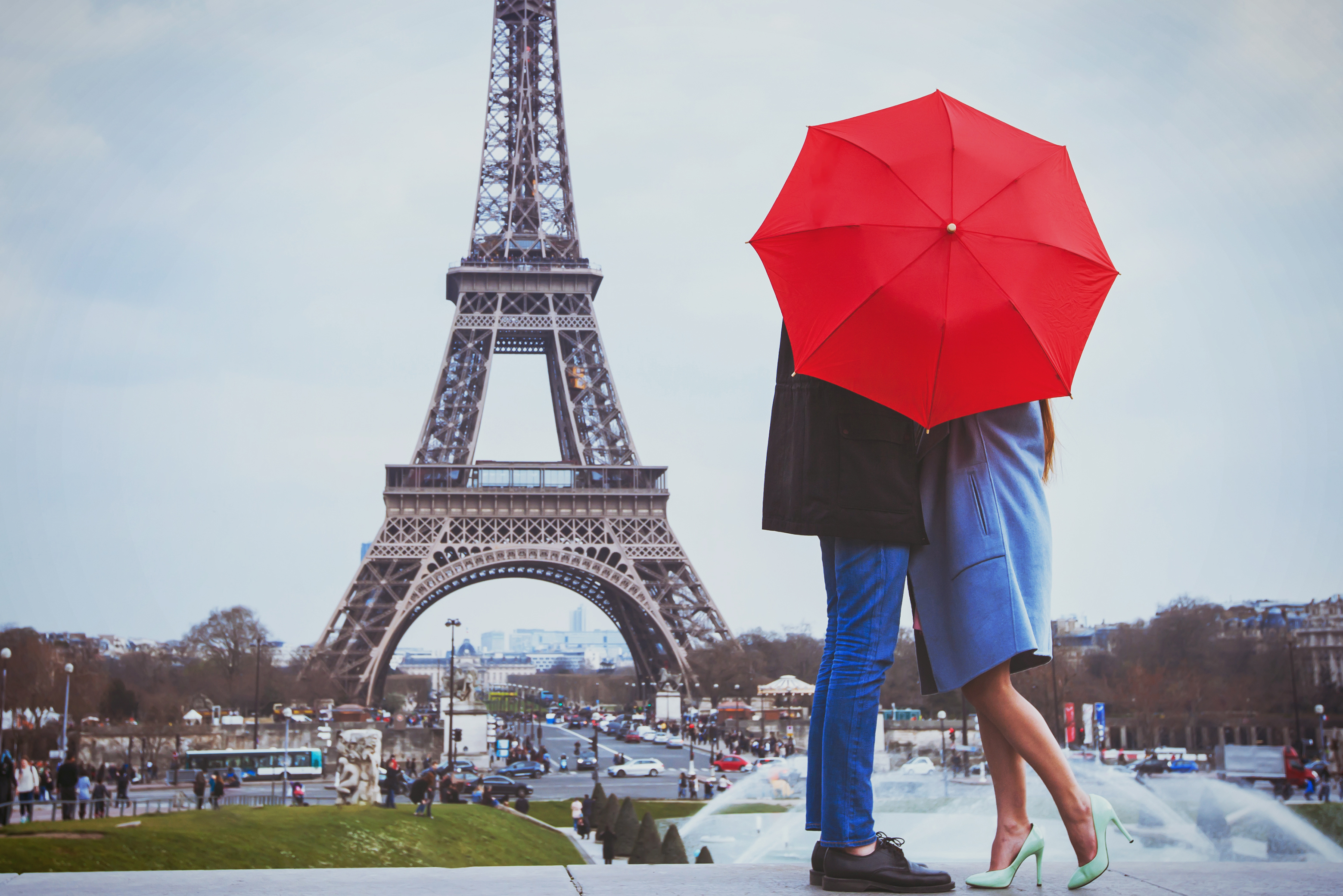
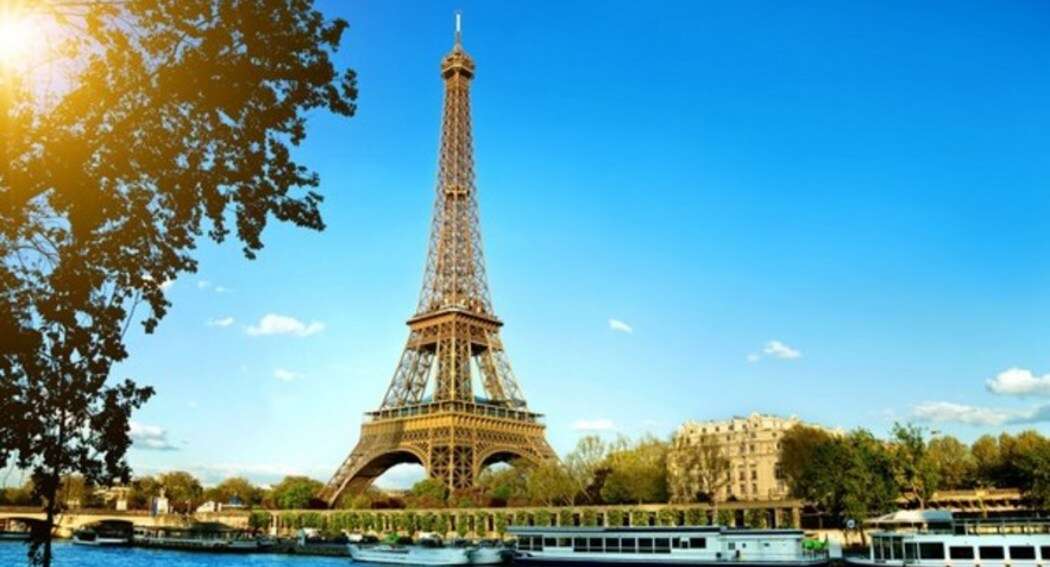
The Eiffel Tower has been a cliché for long enough to have come out the other side. Standing beneath it and tilting your head back to follow the ironwork up into the sky is still a genuinely arresting experience, and watching the light show that runs every hour after dark from the Trocadéro esplanade opposite remains one of the most reliably magical things Paris offers. The Trocadéro Gardens, which slope down to the Seine with the Tower perfectly framed at the far end, are one of the best places in the city for an early morning walk before the crowds arrive. Book summit access online in advance to avoid long queues, and consider timing a visit to the second-floor champagne bar to coincide with sunset, when the light across the city turns the rooftops briefly gold.
Montmartre sits on a hill in the north of the city and has its own distinct atmosphere: narrower streets, fewer cars, artists still working in Place du Tertre, and the white dome of Sacré-Cœur visible from almost everywhere below. Climb the steps or take the funicular and find a spot on the grass in front of the basilica as the afternoon turns into evening, when the city below begins to light up and the scale of Paris becomes visible in a way that street level never quite conveys. The I Love You Wall nearby, a 40-square-metre artwork displaying the phrase in 250 languages across blue tiles, is a quieter and more genuinely touching spot than most guidebooks convey. The neighbourhood rewards extended wandering rather than a quick loop of the highlights, and the candlelit wine bars and bistros on the quieter streets below the hill make a natural continuation of the evening.
Walking along the Seine is not a tourist activity so much as a Parisian one. The river connects the city's most significant buildings and the quieter spaces between them in a single continuous route, and the light on the water changes the character of the walk entirely depending on the hour. The stretch from the Musée d'Orsay westward toward the Eiffel Tower at sunset is the most consistently beautiful, with the bridges providing natural stopping points and the river offering a perspective on the city that the streets do not. The Pont Neuf, the oldest bridge in Paris, and the smaller Pont de la Tournelle near Notre Dame both hold their own atmosphere: the latter offers one of the finest views of the cathedral's restored east end from the water, a view that became considerably more significant after the fire of 2019 and the reopening in December 2024. For those interested in walking Paris at a more guided pace, a self-guided route along the river makes the most of the city's walkable riverbanks.
The most memorable parts of a romantic trip to Paris are rarely the obvious ones. They tend to be the things that happen between the sights: a morning spent in a covered passage that time seems to have passed over, a cooking class in someone's apartment kitchen, an opera performance in a building so extravagant it demands to be experienced rather than simply visited. The activities below are the ones that give a stay in Paris its particular texture.
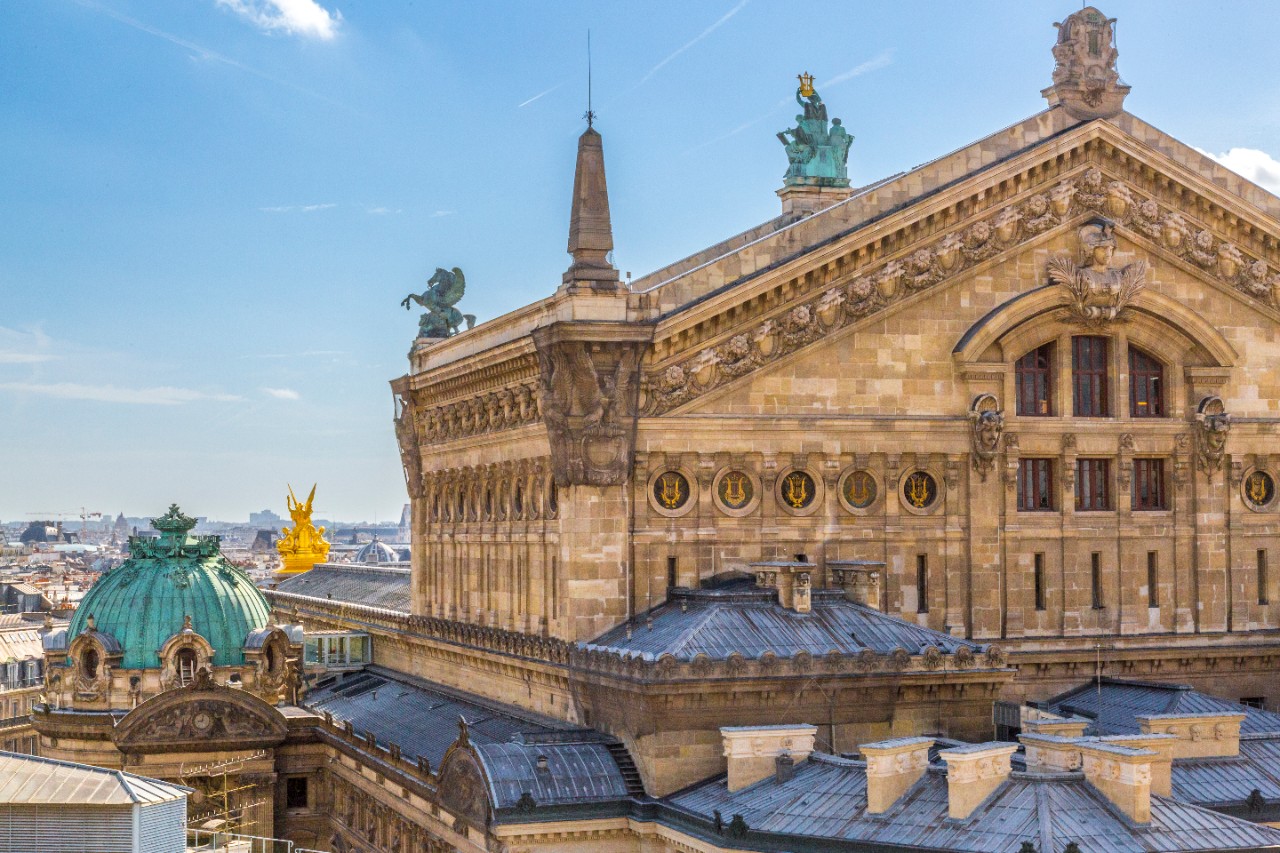
The Palais Garnier is not simply a venue for opera and ballet: it is one of the most extraordinary interiors in Europe, a 19th-century building of red velvet, gilded balconies and a six-tonne chandelier that fills the ceiling above a Marc Chagall fresco. The opera and ballet season runs across most of the year, with performances typically beginning in September and running through July. Attending a performance here is one of those evenings that leaves both people in agreement for days afterward. Book well in advance for the most popular productions, and take time before the curtain to walk the grand staircase and the foyer, which are as much a part of the experience as the stage.
The covered passages of Paris are 19th-century glass-roofed shopping arcades that feel like a hidden layer of the city laid over the more familiar version. Galerie Vivienne near the Palais Royal is the most beautiful, with mosaic floors, elegant neoclassical decoration, a small antiquarian bookshop and a wine bar at one end where the afternoon can lose itself naturally. Passage des Panoramas and Passage Verdeau connect to form a longer route through the 9th arrondissement, past stamp dealers, vintage bookshops and tea salons that have been there for decades. The passages are best visited on a grey afternoon when the light through the glass ceiling turns everything soft, and they are consistently less crowded than any outdoor sight of comparable quality.
Taking a cooking class together is among the most enjoyable ways to spend a morning or afternoon in a city that defines how food is prepared and experienced. Several Paris cooking schools run couples-friendly sessions covering everything from classic sauce technique to macaron-making, typically including market shopping, hands-on preparation and sitting down to eat what you have made at the end. The experience works particularly well as a morning activity on a day when the afternoon and evening are already arranged, and the skills, such as they are, travel home in a way that most souvenirs do not.
Canal Saint-Martin winds through the 10th arrondissement past iron footbridges, leafy plane trees and the kind of independent bars and cafés that the more central neighbourhoods have largely been priced out of. The canal itself is particularly striking in the late afternoon, when the light filters through the trees and the stone edges attract couples sitting with wine and cheese from one of the nearby shops. It is a less obviously romantic setting than Montmartre or the Seine, but more genuinely Parisian in atmosphere, and the neighbourhood's low-key energy makes it one of the better places in the city to spend an unscheduled afternoon.
Paris sets a standard for romantic dining that most cities spend their careers trying to approximate, and the range of what is available, from neighbourhood bistros with checked tablecloths to Michelin-starred rooms overlooking the Seine, means there is a version of a romantic dinner in Paris for every kind of couple. The experiences below span that range, with an emphasis on what the setting contributes as much as the food.
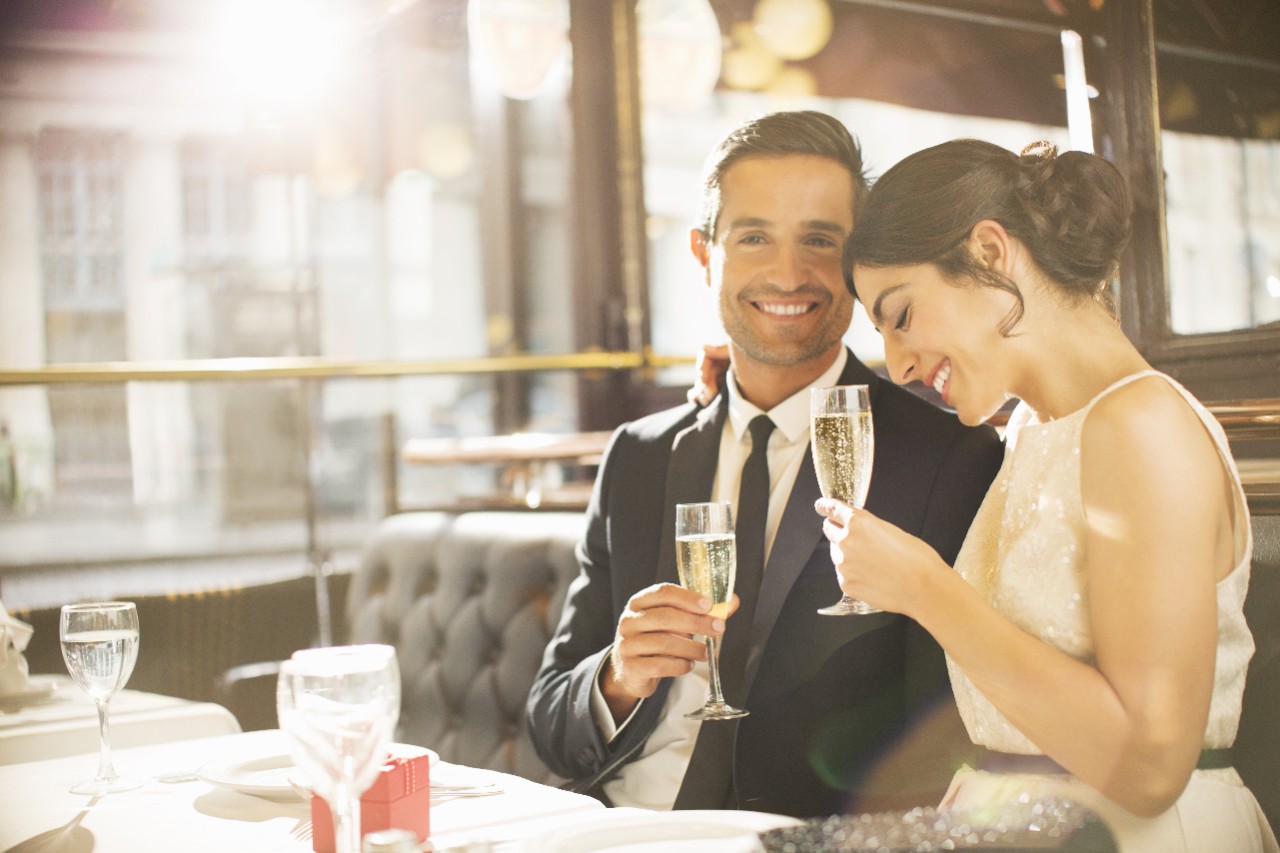
A dinner cruise on the Seine is the single most comprehensive romantic dining experience Paris offers: the river, the monuments, the light on the water and a meal, all simultaneously. Bateaux Parisiens departs from beneath the Eiffel Tower and covers the central stretch of the river past Notre Dame, the Louvre and the Conciergerie, with a French menu served at white-linen tables while the city moves past the windows. Bateaux Mouches runs a similar service departing from the Pont de l'Alma, with menus that typically include foie gras, fish and a champagne-paired dessert course. Both services run nightly and require advance booking, particularly at weekends and during spring and summer.
Le Jules Verne is on the second floor of the Eiffel Tower, 125 metres above the Champ de Mars, and has held a Michelin star under chef Frédéric Anton since 2020. The elevator access is private, the tables are positioned to maximise the panoramic view, and the menu is seasonal French cuisine at a level that justifies the setting rather than being carried by it. It is not the most discreet or intimate dining room in Paris, but for a first visit to the city as a couple, or for an occasion that specifically demands Paris at its most theatrical, there is nothing that quite competes. Reserve as early as possible, ideally several weeks in advance, and specify a window table when booking.
La Tour d'Argent on the Quai de la Tournelle has been in operation since 1582 and commands a rooftop view of Notre Dame and the Seine from the 6th floor that is among the finest in Paris. The house speciality, pressed duck served at the table from a numbered silver press, has been on the menu since the 19th century and is one of those dining experiences that is genuinely singular rather than merely old. The dining room is formal and elegant in a manner that the city increasingly struggles to sustain, and the wine cellar, with several hundred thousand bottles dating back decades, is one of the most serious in France. An evening here is an investment, but one that the setting and the kitchen repay without difficulty.
Not every romantic dinner in Paris requires a reservation made weeks in advance. The neighbourhood bistro is as much a part of the city's romantic dining culture as the starred restaurants, and the 8th arrondissement around Le Claridge is particularly well served. Trente-Trois at Maison Villeroy, just steps from Avenue Montaigne, holds a Michelin star in a setting of a private mansion where chef Sébastien Sanjou cooks sun-influenced French cuisine in a room that feels designed for exactly this kind of evening. For something more immediate and neighbourhood in character, the candlelit bistros of Saint-Germain-des-Prés and the Latin Quarter, a short taxi ride south, offer the checked tablecloths, attentive service and classic French cooking that represent a different but equally valid version of a romantic dinner in Paris.
Fraser Suites Le Claridge Champs-Élysées is set within a Directoire-style townhouse on the Champs-Élysées, one of the world's most celebrated addresses, inside a dining room that has been welcoming guests for over 80 years. The Arc de Triomphe is a short walk. The Trocadéro and the Eiffel Tower are reachable on foot in around twenty minutes. The Palais Garnier and the covered passages of the 9th arrondissement are a short journey east. For couples who want to explore what the broader Champs-Élysées area and the city around it offer, the property's central position makes the whole of Paris feel within reach.
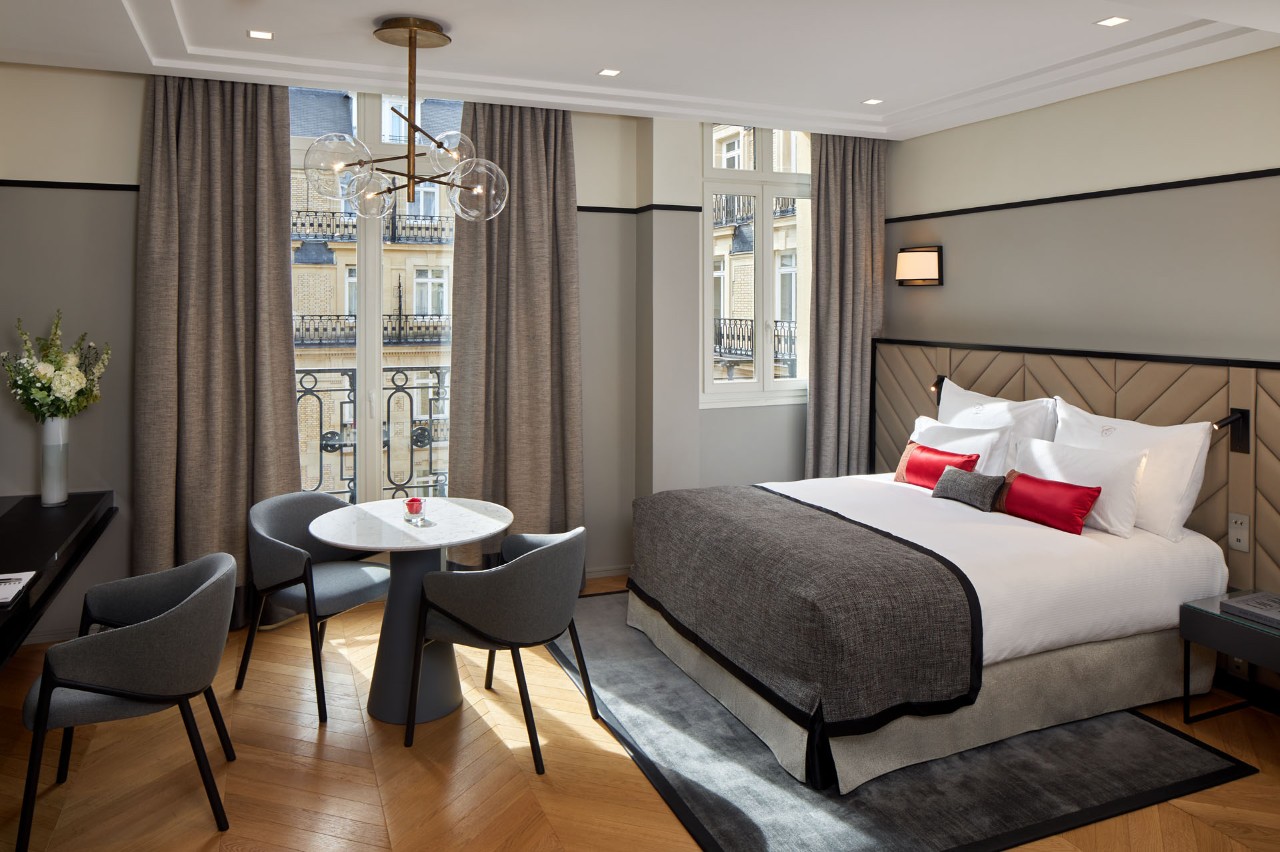
Accommodation comprises elegantly appointed suites and apartments with fully equipped kitchens, generous living areas and the kind of space that makes returning to the room after a long evening feel like a continuation of the occasion rather than an afterthought. On-site facilities include a concierge team experienced in securing restaurant reservations, theatre tickets and private experiences across the city. View current offers to plan your stay.
The 8th arrondissement, centred on the Champs-Élysées and the streets around the Arc de Triomphe, gives couples immediate access to the Trocadéro, the Seine and the Eiffel Tower without being in the most congested tourist zones. Montmartre in the 18th arrondissement offers a different atmosphere entirely: village-scaled, historically layered and particularly atmospheric in the evening when the day-trippers have left. Saint-Germain-des-Prés on the Left Bank is the neighbourhood most associated with the literary and intellectual romance of Paris, with its bookshops, wine bars and the Luxembourg Gardens a short walk south. Each suits a different kind of couple and a different idea of what a romantic evening in Paris should feel like.
Spring from April to June is widely considered the most romantic season: the city's parks and gardens are at their best, the light is soft and consistent, café terraces open fully, and the weather suits walking between the sights that make Paris what it is. Early autumn in September and October offers similar conditions with fewer visitors than the summer peak. February around Valentine's Day is popular and the city leans into the occasion, but the colder temperatures make evening walks along the Seine less comfortable, and reservations at the better restaurants should be made considerably further in advance than at other times of year. The autumn walks and gardens of Paris make a particularly good case for an October visit.
Le Jules Verne takes reservations through its own website and through concierge services at leading Paris hotels. Tables with direct Eiffel Tower views are the most sought-after and the most quickly booked, particularly for Friday and Saturday evenings. Booking four to six weeks in advance is advisable for a standard visit; during high season from May to September, earlier booking significantly increases the chances of securing a preferred table. Guests with specific requirements, such as a special occasion setting or a particular table position, should communicate these directly when making the reservation. The property concierge at Fraser Suites Le Claridge Champs Elysées is well placed to assist with this.
Several of the city's most genuinely romantic experiences require no booking at all. Walking the Seine from the Musée d'Orsay to the Eiffel Tower at sunset is free and takes around an hour at a relaxed pace. The Luxembourg Gardens are open daily and free to enter. Montmartre, the I Love You Wall and the Trocadéro Gardens all require nothing beyond the journey to get there. The covered passage of Galerie Vivienne is open during shopping hours and never crowded. Sitting at a café terrace on a quiet side street with a carafe of wine and nowhere in particular to be is, by most accounts, the most reliably romantic thing Paris offers, and it has been free since the city invented it.
For a first romantic visit to Paris, yes. The cruise format combines what the city does best in a single two-hour experience: the river, the monuments, French cuisine and the particular quality of Paris at night viewed from the water. The experience is not intimate in the way that a small bistro is, but it is spectacular in a way that nothing at ground level quite matches. For couples who have visited Paris before and are looking for something less expected, a table at a neighbourhood restaurant in the Marais or a private guided walk through the covered passages will feel more personal. For a first occasion or a significant anniversary, the Seine at night from a dinner boat is difficult to argue against.