23 February 2026
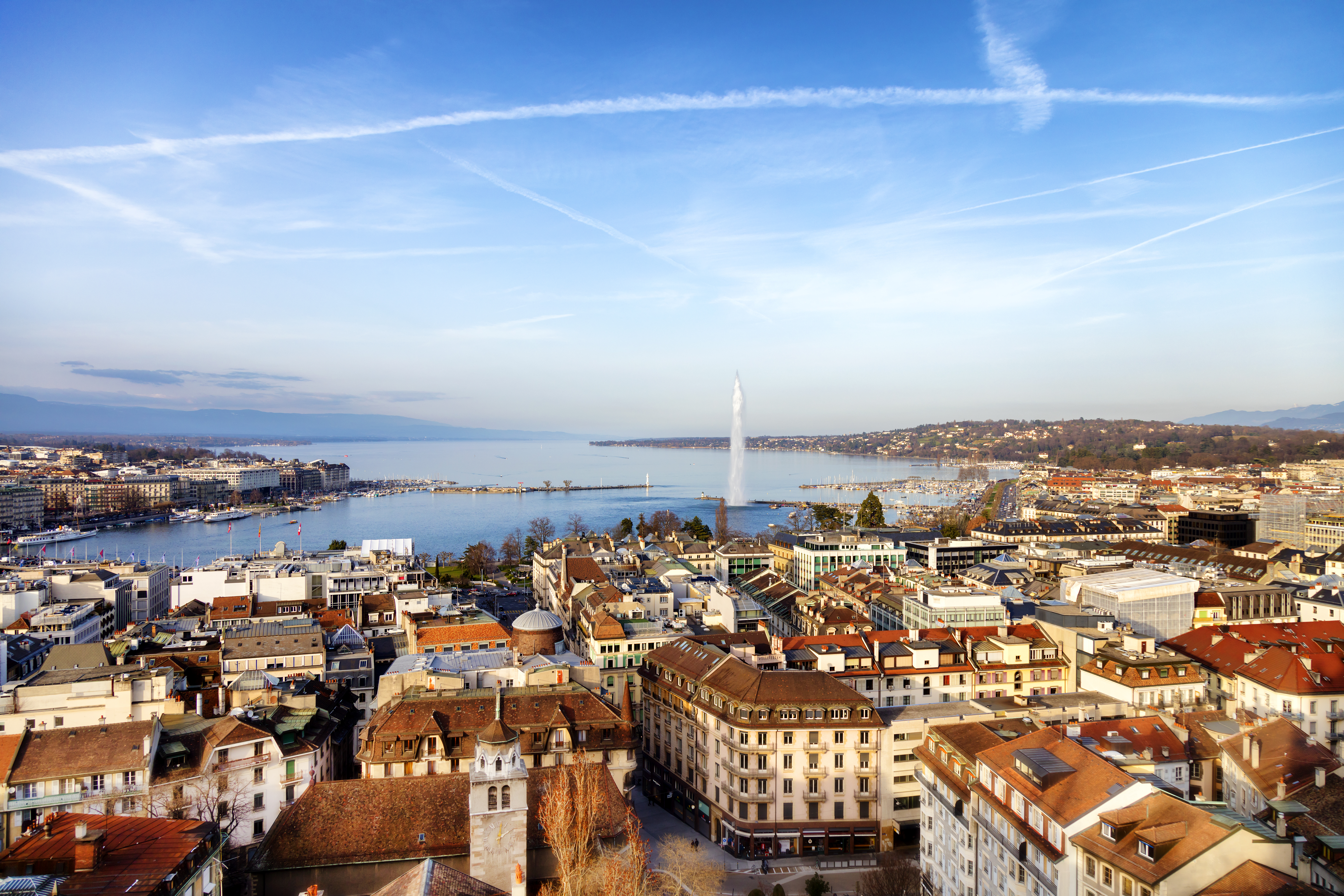
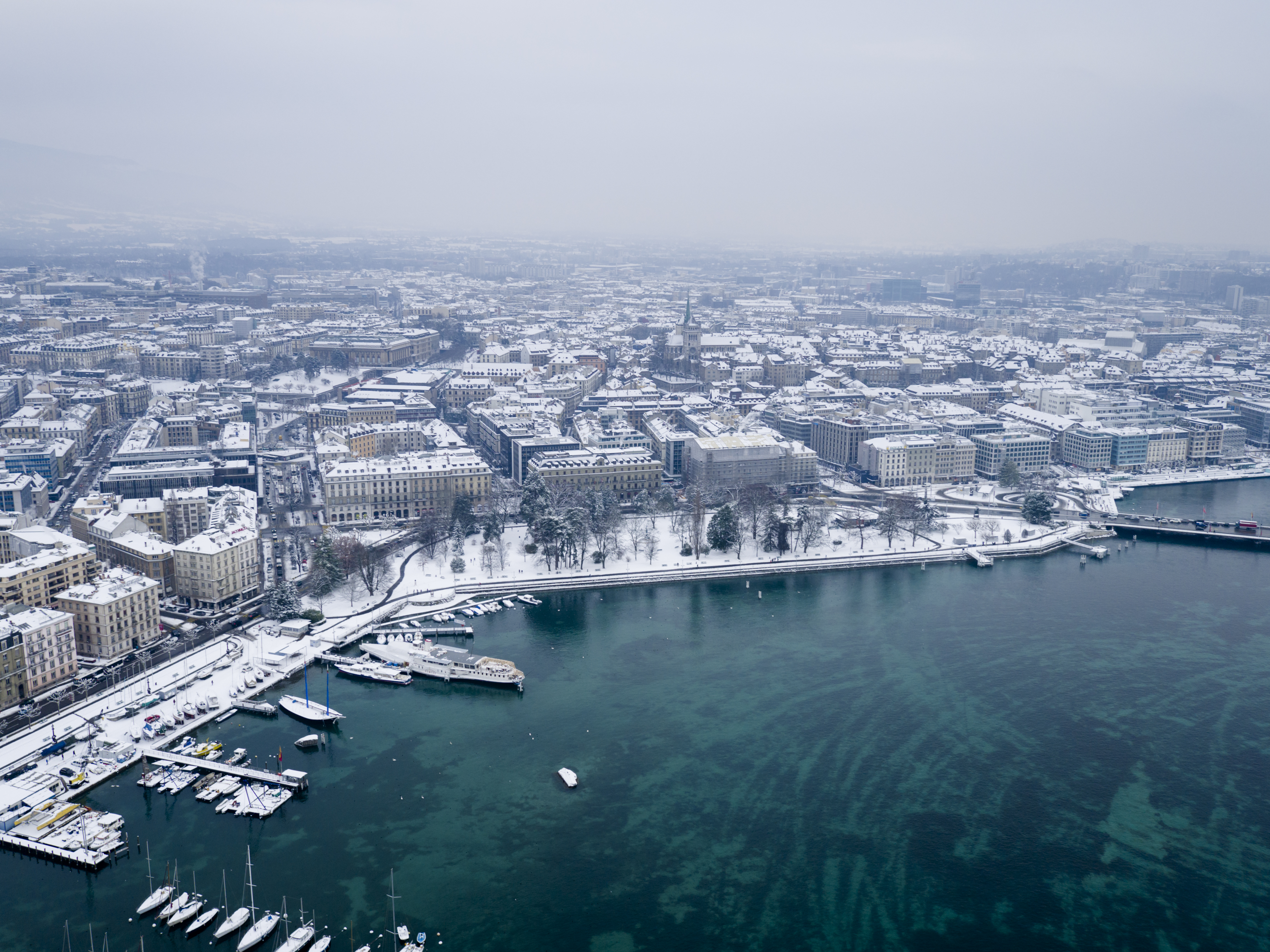
Geneva is a city that reveals itself through its buildings. Every era of the city's history has left something behind the medieval stones of the Old Town, the civic grandeur of international institutions, the precision of watchmaking headquarters, the quiet confidence of lakeside residential architecture.
Walk far enough in any direction and the layers accumulate into something that feels less like a city and more like a carefully edited argument for what architecture can do when a place takes it seriously. For those staying at Fraser Suites Geneva, much of the city's most significant architecture is within easy walking distance, and the building you are staying in has its own story worth knowing.
Geneva's Vieille Ville is the largest historic city centre in Switzerland, and its streets hold more architectural history per square metre than almost anywhere else in the country. The Old Town sits on a hillside above the Rhône and the lake, its cobbled lanes and stone buildings compressed into a neighbourhood that has been continuously inhabited since Roman times.
The Cathédrale Saint-Pierre is Geneva's most significant building and one of the most architecturally complex in Switzerland. Construction began in the 12th century in Romanesque style, continued through Gothic phases, and was completed with a neoclassical facade in the 18th century: three distinct architectural moments compressed into one structure. The result is unusual rather than incoherent, and the interior rewards close attention, particularly the Chapel of the Maccabees with its elaborate medieval decoration, which survived the Protestant Reformation's stripping of the main cathedral in 1535.
Beneath the cathedral, an archaeological site spanning more than 1,000 years of construction is open to visitors, revealing the foundations of earlier buildings including a 4th-century mosaic. Above it, climbing the 157 steps of the north tower delivers panoramic views over the city, the lake, and on clear days the Alps beyond. The cathedral is the focal point of the Old Town and the natural starting point for any architectural exploration of Geneva.
Adjacent to the cathedral, the Hôtel de Ville forms part of a civic cluster that includes the Maison Tavel, the oldest private house in Geneva dating from the 14th century, and the Reformation Wall in the Parc des Bastions.
The Reformation Wall, completed in 1909, stretches 100 metres along the university gardens and features five-metre statues of the four principal Genevan reformers, an outdoor monument on a scale that sits somewhere between architecture and landscape. The Old Town as a whole offers a walkable sequence of buildings that moves from Romanesque through Gothic, Renaissance, and neoclassical, making it one of the most architecturally varied historic centres in the region.
Geneva's identity as a centre of international diplomacy has produced some of the city's most imposing buildings, concentrated in a district north of the lake where institutions occupy grand premises within parkland settings.
The Palais des Nations is the European headquarters of the United Nations and one of the most significant examples of interwar architecture in Europe. Built between 1929 and 1938 to house the League of Nations following an international design competition that attracted 377 entries, the complex stretches 600 metres and contains 2,800 offices.
The architectural language draws on Art Deco and classical traditions, with vast marble-lined interiors and assembly halls designed for the theatre of international negotiation. The building overlooks Lake Geneva from Ariana Park, whose grounds were bequeathed to the city in 1890 on the condition that peacocks always roam freely within them, a condition still honoured today.
Guided tours run throughout the year and provide access to the assembly halls, the Council Chamber, and the gardens. In front of the main entrance, the Broken Chair sculpture by Daniel Berset, standing 12 metres tall on three legs, serves as a monument to the victims of landmines and cluster bombs, and has become one of the most photographed contemporary works in the city.
Fraser Suites Geneva guests can reach the Palais des Nations by direct tram, with the journey taking around 15 minutes. For more detail on visiting, the property's own guide to the Palais des Nations is a useful starting point.
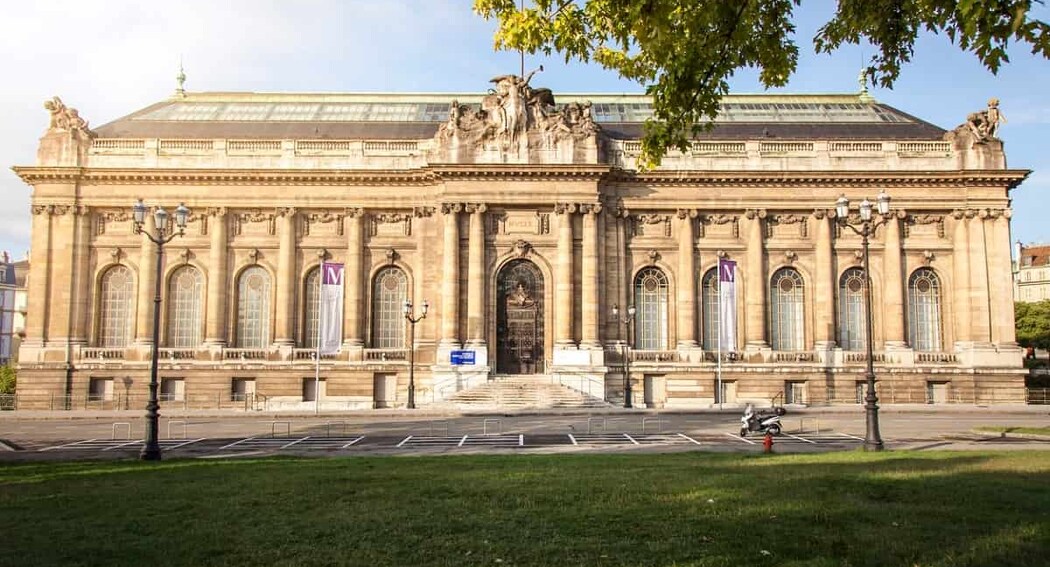
The park setting of the Palais des Nations is itself worth noting. Ariana Park's mature trees, formal gardens, and lake views create a landscape that softens the scale of the institutional architecture around it, and the combination of the interwar Palais, the neoclassical Ariana Museum, and the outdoor sculpture creates a district that rewards a longer afternoon walk rather than a single focused visit.
Geneva's contemporary architectural scene is quieter than Zurich's but more considered, with buildings that tend to prioritise precision and material quality over spectacle.
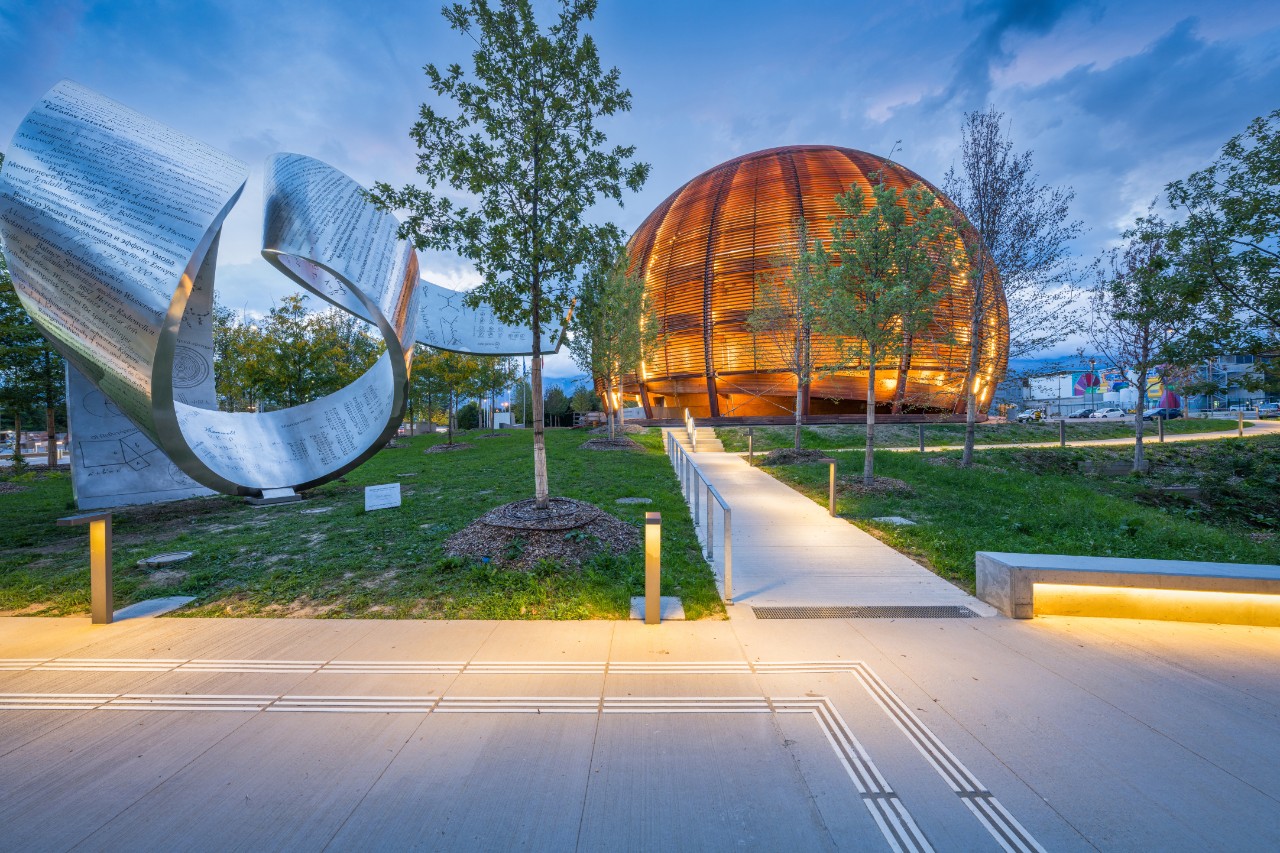
Eight kilometres west of the city centre, CERN's campus contains one of the most distinctive pieces of Geneva modern architecture in the Globe of Science and Innovation. The wooden sphere, reaching 27 metres in height and 40 metres across, was designed as a symbol of sustainable construction and is comparable in scale to the dome of St Peter's Basilica in Rome.
The Globe houses an exhibition on particle physics accessible to the public, and the surrounding campus gives a sense of the scale of scientific infrastructure that Geneva has accumulated. The proximity of CERN to central Geneva, and the contrast between the city's watchmaking heritage and its particle physics research, captures something of the city's particular combination of the precise and the visionary.
In the Grottes district, the housing complex known as Les Schtroumpfs offers a different register entirely. Built between 1982 and 1984 by three architects drawing on the influence of Gaudí, the curved walls, irregular angles, and bright colours of this residential development housing 750 families stand as a deliberate counterpoint to Geneva's reputation for restraint. It is one of the most discussed pieces of postmodern architecture in Switzerland and sits within an otherwise conventional residential neighbourhood, which makes the encounter with it more rather than less surprising.
The Rue du Rhône and the surrounding shopping district present a different version of Geneva modern architecture: the considered facade design of luxury retail, where brands including Rolex, Patek Philippe, and Cartier have shaped their buildings to communicate something about the objects sold within them. The architecture here is commercial rather than civic, but the precision of the design work reflects the same values that define the watches themselves. The relationship between Geneva's built environment and its watchmaking identity runs deeper than branding: the city's reputation for craftsmanship and discretion is expressed as much in its architecture as in its products.
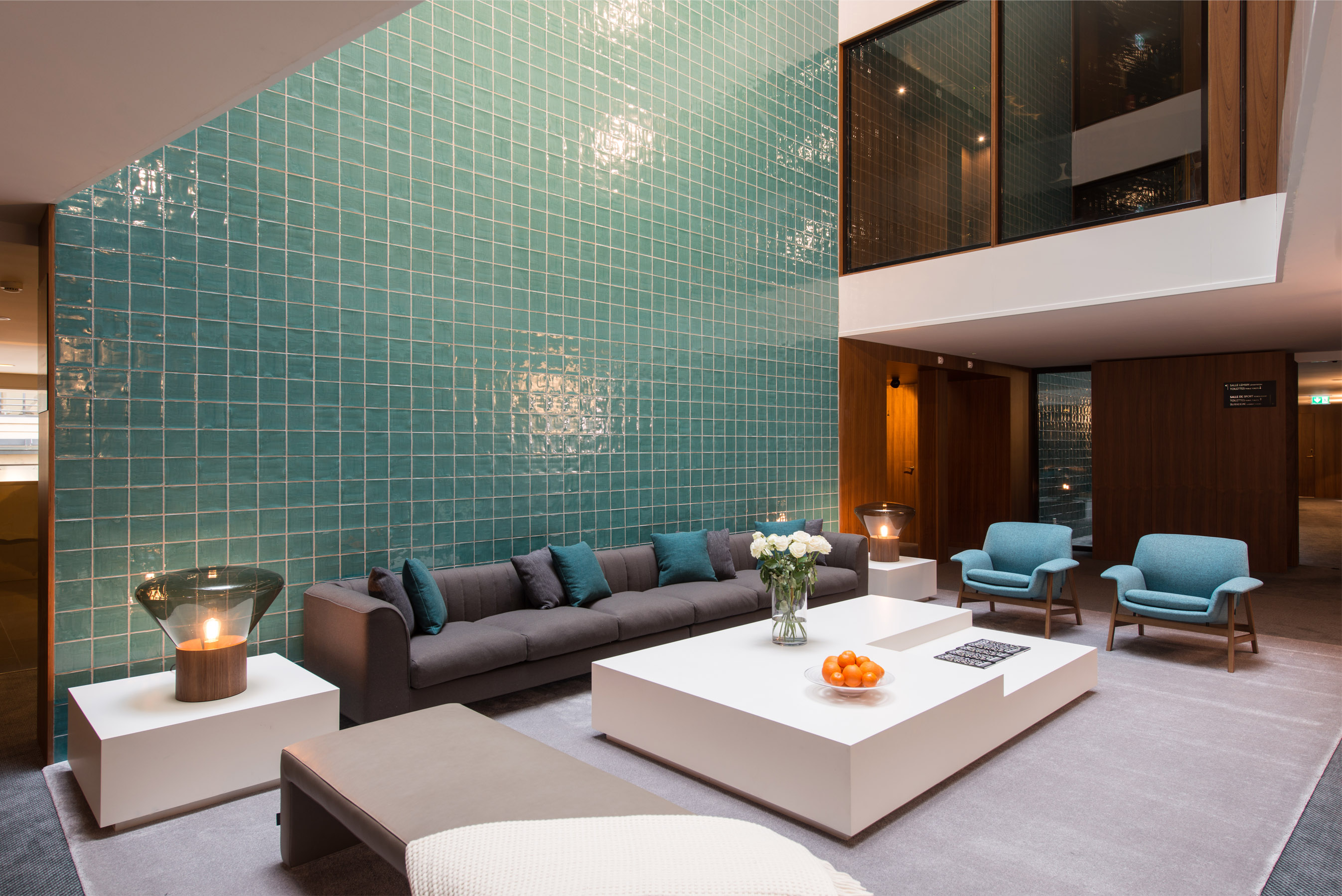
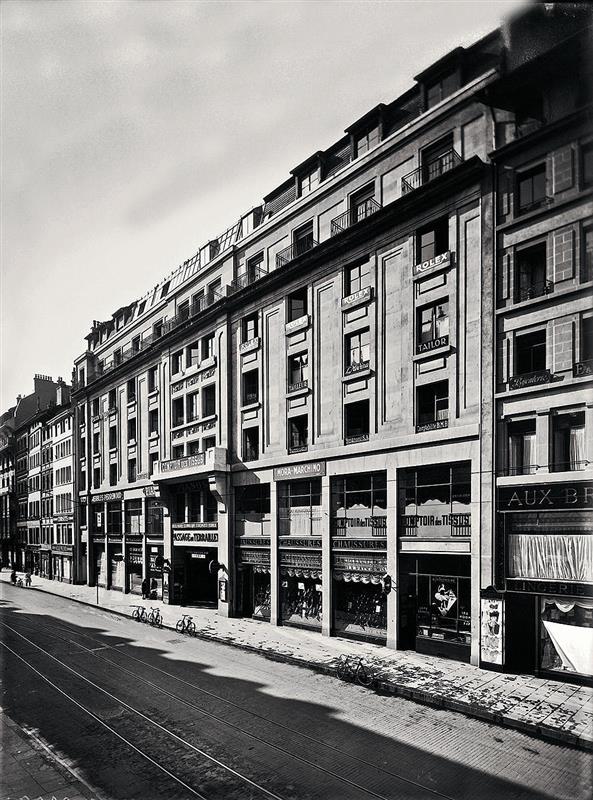
Fraser Suites Geneva occupies a building on the Rue de la Rôtisserie in the heart of the city's shopping and business district, and the property carries a layer of Geneva history that makes staying here feel more considered than a conventional hotel choice. The building served as the offices of Rolex, one of the most significant names in watchmaking and a company synonymous with Geneva's global identity. The conversion to a contemporary serviced residence has retained the building's central position within the luxury quarter while giving it a new and thoroughly different kind of purpose.
The address places guests in immediate proximity to the Rue du Marché and the Rue du Rhône, within the same neighbourhood as the boutiques and financial institutions that define this part of the city. Major architectural landmarks including the Cathédrale Saint-Pierre and the Old Town are a short walk uphill. The lake, the Jet d'Eau, and the Jardin Anglais are three minutes on foot. The Palais des Nations is reachable by direct tram.
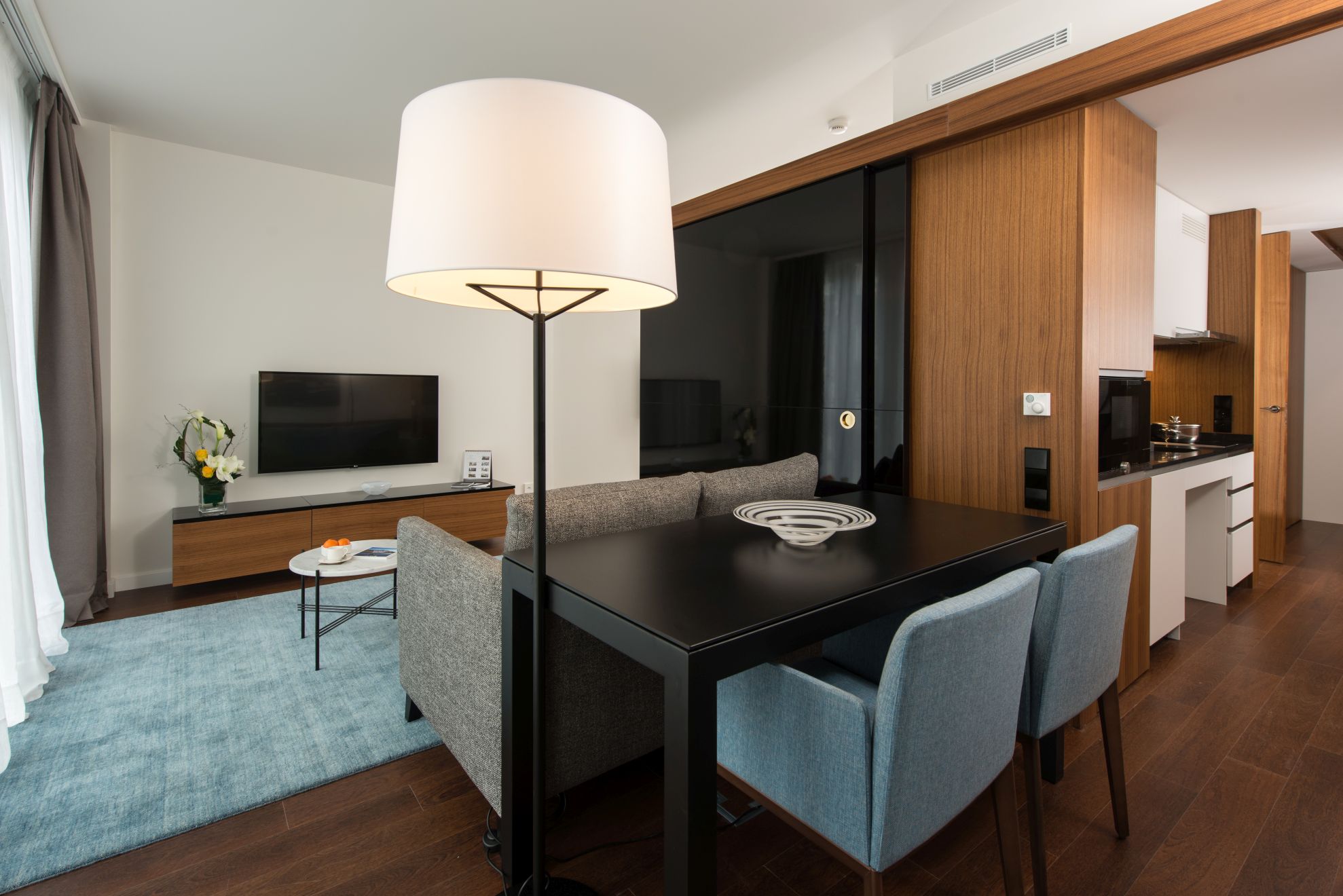
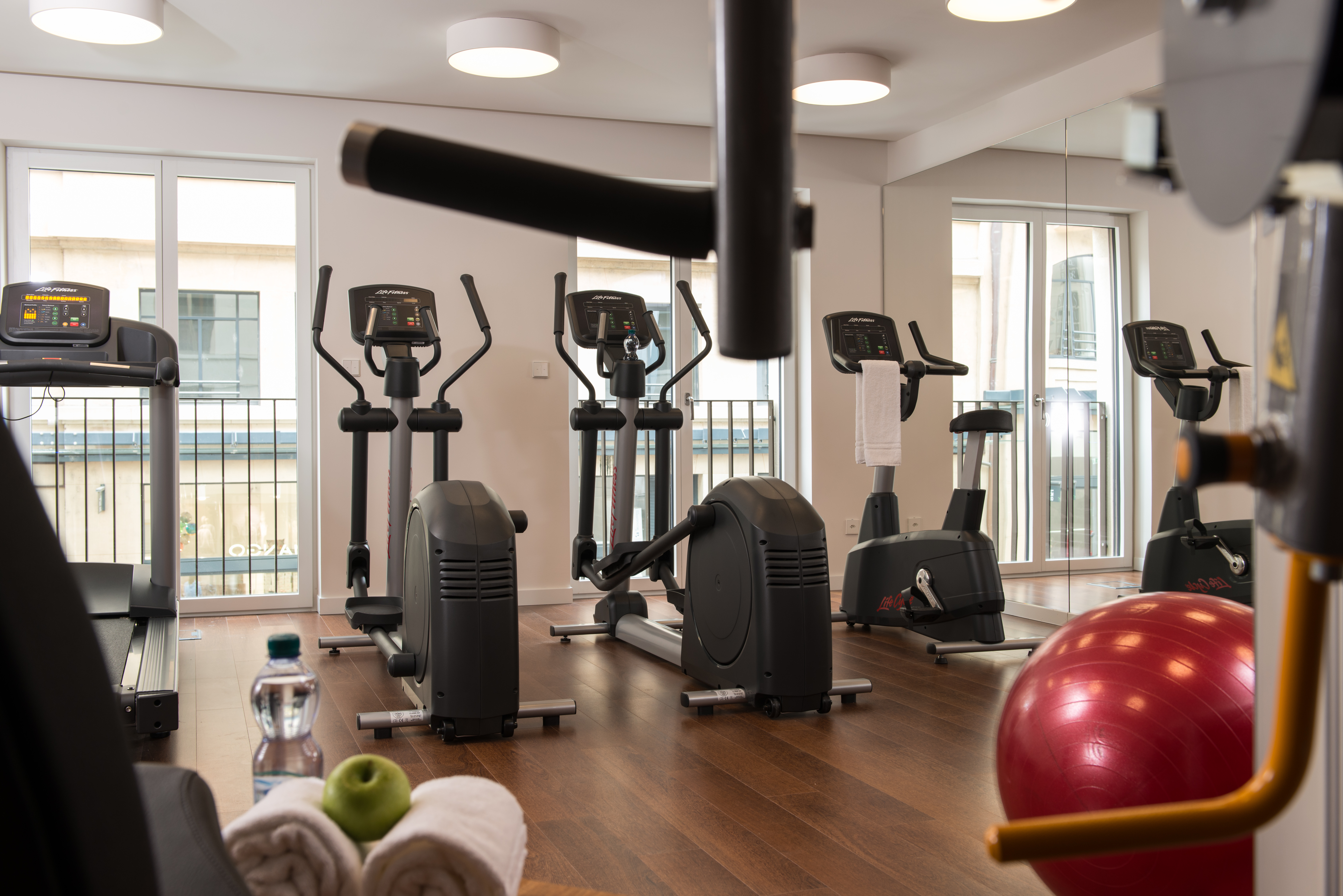
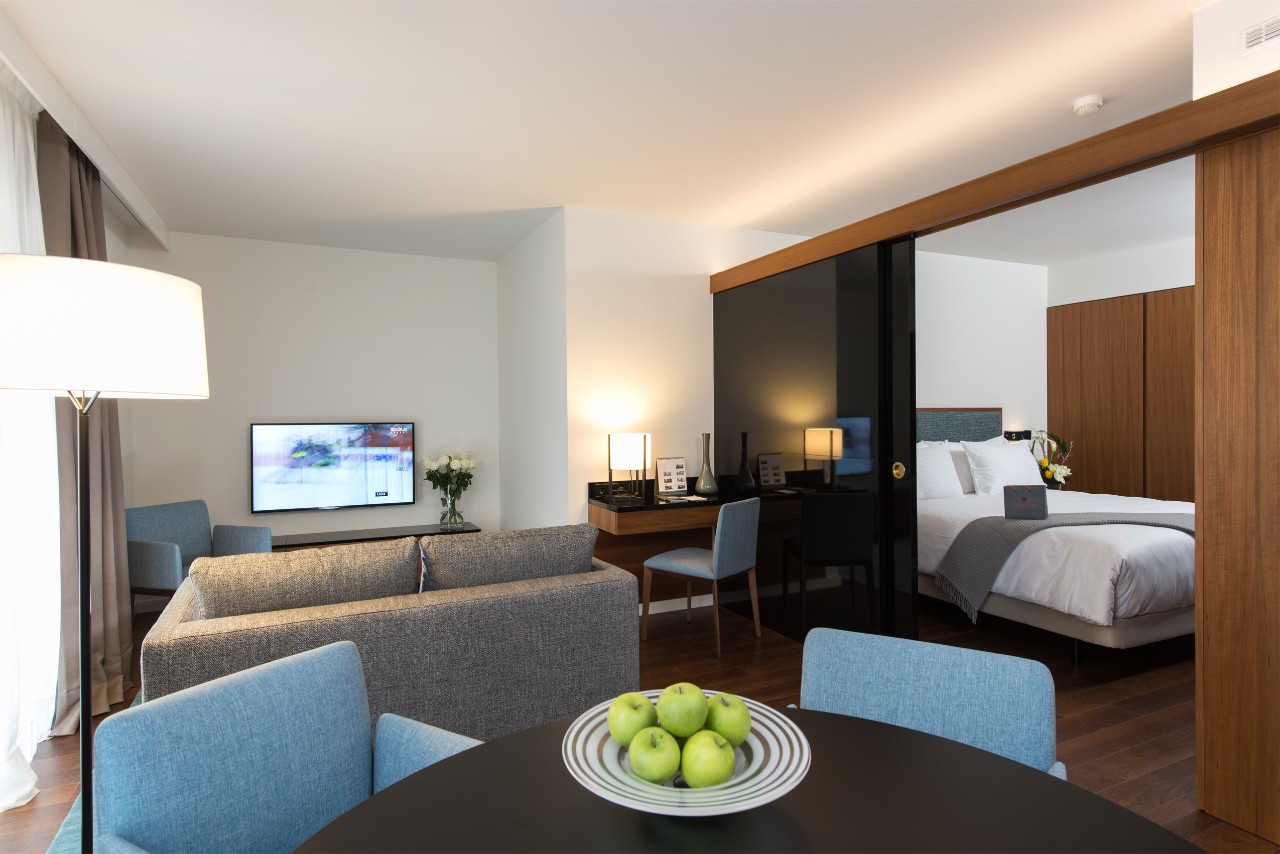
Accommodation across the property's 67 suites range from 44 to 50 sqm, furnished with separate living, dining, and kitchen areas. Opting for interconnecting suites provide a perfect balance of privacy and togetherness, making them a great choice for families visiting the city. For those planning longer visits to explore the city's architectural layers at a slower pace, extended stay options are available, with apartments designed for stays of 90 days or more. Families exploring Geneva together will find the family amenities thoughtfully considered. View current offers to plan your stay.
The Cathédrale Saint-Pierre in the Old Town is Geneva's most visited architectural landmark, combining Romanesque, Gothic, and neoclassical elements built across several centuries. The Palais des Nations, the European headquarters of the United Nations, is equally significant for its interwar Art Deco design and its role in international history.
The Globe of Science and Innovation at CERN is one of the most distinctive pieces of contemporary architecture near the city. In the residential neighbourhoods, Les Schtroumpfs in the Grottes district offers a postmodern counterpoint to Geneva's generally restrained aesthetic. The Rue du Rhône shopping district presents a more commercial version of considered modern design.
Yes, guided tours run throughout the year and provide access to the interior of the building including the assembly halls and Council Chamber, as well as the grounds of Ariana Park. Tours last approximately one hour and are available on weekdays.
Fraser Suites Geneva is housed in a building on the Rue de la Rôtisserie that formerly served as offices for Rolex, one of the world's most recognised watchmaking brands. The building has since been converted into a contemporary serviced residence and sits within the prestigious Rue du Marché shopping and business district.
The Cathédrale Saint-Pierre and Geneva Old Town are within easy walking distance uphill from the property. The lake, with a view of the Jet d’Eau and the Jardin Anglais, is just a three-minute walk away. The Palais des Nations is approximately 15 minutes away by direct tram from the city centre.
The Old Town is the largest historic city centre in Switzerland and contains architectural layers spanning Roman foundations, medieval churches, Renaissance civic buildings, and neoclassical facades. The archaeological site beneath the Cathédrale Saint-Pierre alone spans more than 1,000 years of building history and is one of the most significant archaeological sites in the country.

Contact Us
Rue de la Rôtisserie 3-5, 1204 Geneva, Switzerland

.jpg)