18 August 2026
Frankfurt has two personalities that rarely show themselves to the same visitor. By day, glass towers and banking headquarters give the skyline a purposeful, international air more in common with Singapore or London than the rest of Germany. Step onto a train from Frankfurt Hauptbahnhof, though, and that same efficiency turns into something more useful: within an hour you can be wandering a Renaissance old town, tasting Riesling above the Rhine, or covering three centuries of German history in a single afternoon.
For guests staying longer, whether tied to a trade fair schedule at Messe Frankfurt or simply making the most of an extended visit, Capri by Fraser Frankfurt makes a practical base for building day trips around business. Its apartments sit close to Frankfurt Hauptbahnhof, the departure point for everything covered in this guide, so getting out of the city costs little more than the walk to the platform.
Frankfurt's position at the centre of Germany's rail network means some of the country's most rewarding day trips start less than an hour from the platform, alongside plenty of things to see in the city itself on the days that stay closer to home. The three options below cover a range of paces, from a full day exploring Heidelberg to a couple of hours' escape to Mainz between meetings.
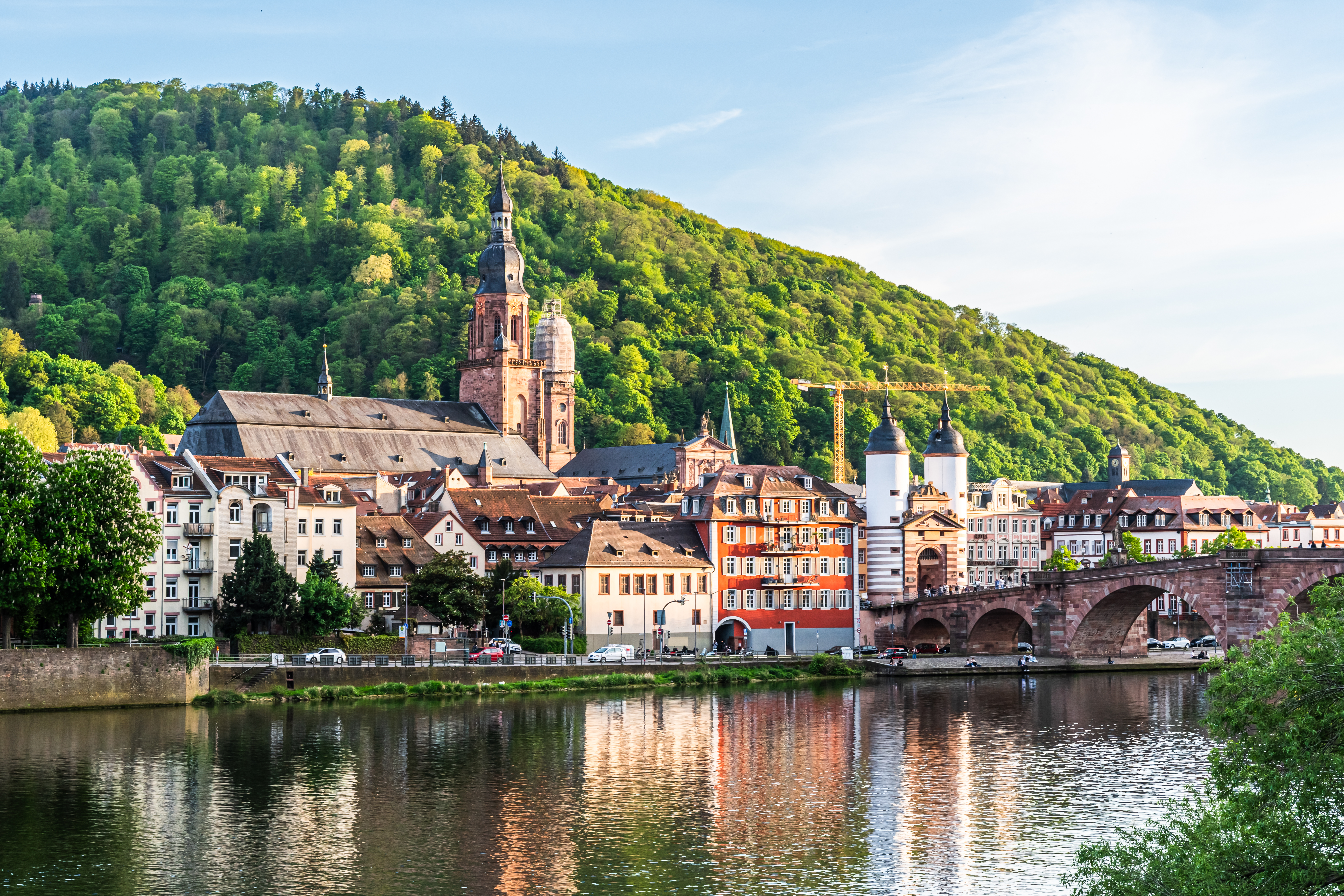
Heidelberg is the day trip most visitors ask about first, and it earns the reputation. Its Altstadt, one of the few old towns in Germany to escape heavy bombing in the Second World War, climbs from the Neckar river up to the ruins of Heidelberg Castle, a red sandstone complex left partly unrestored since a series of fires and a lightning strike in the 18th century rather than rebuilt from scratch.
Heidelberg University, founded in 1386, gives the old town a youthful energy that balances its history, and the Philosophers' Walk on the opposite riverbank, reached via the Alte Brücke, offers one of the best views back across the rooftops and castle grounds. Marktplatz, at the centre of the old town, is worth timing a lunch around, with the Church of the Holy Spirit rising directly above the market stalls. Direct trains from Frankfurt take around an hour, making it comfortably a same-day trip even with a late start.
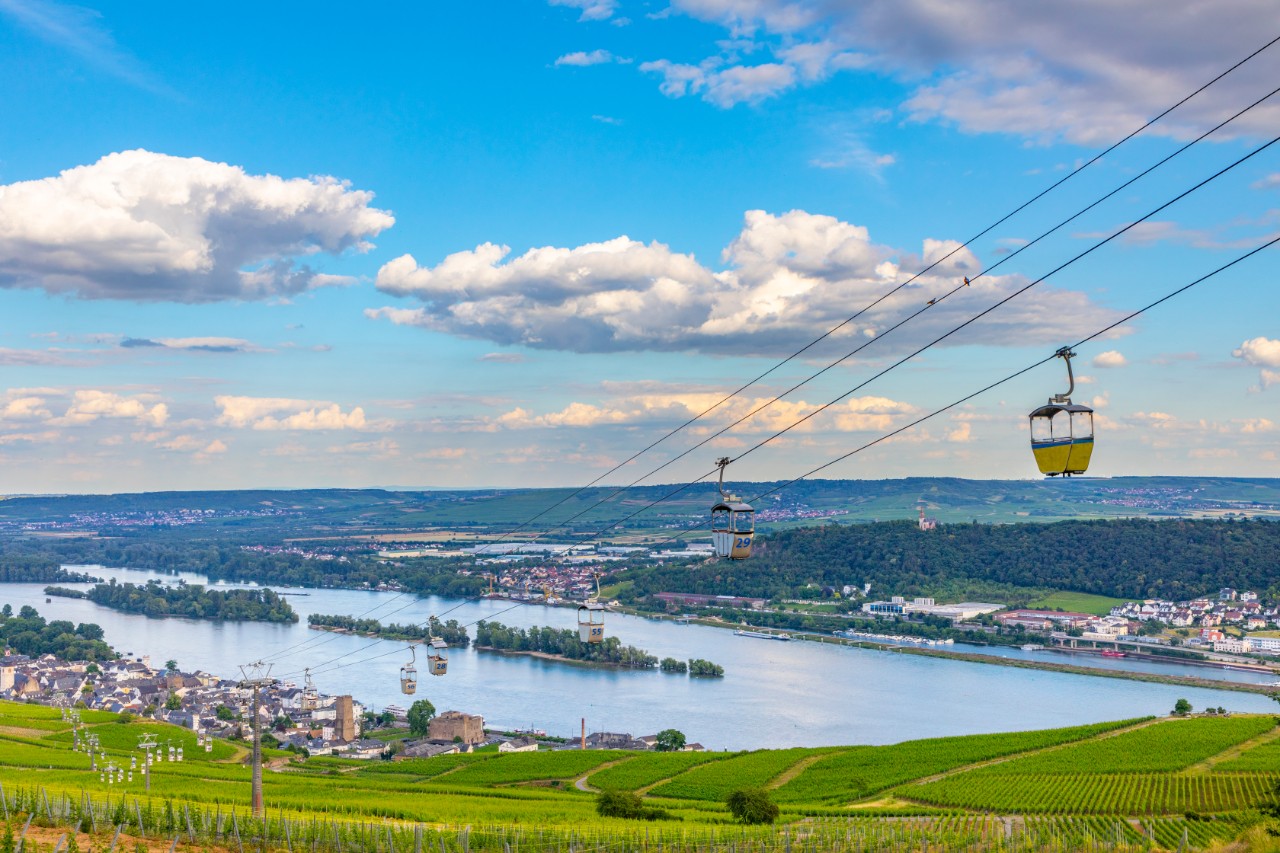
The stretch of the Rhine around Rüdesheim is where the river earns its postcard reputation, with terraced vineyards rising steeply from the water and a castle appearing around almost every bend, part of the UNESCO-listed Upper Middle Rhine Valley. Rüdesheim itself is a compact wine town built for an afternoon of tasting, and a cable car climbs from the edge of town, over the vineyards, to the Niederwald Monument for a wide view over the valley. Visitors with more time can extend the trip with a river cruise between Rüdesheim and Bacharach or St Goar, passing the Loreley rock and a run of hilltop castles along the way. Direct trains from Frankfurt reach Rüdesheim in a little over an hour.
For guests with only a few hours free between meetings, Mainz and Wiesbaden are close enough to fit into an afternoon rather than a full day. Mainz, around half an hour away, is home to the Gutenberg Museum, dedicated to the city's most famous resident and the invention of movable-type printing, alongside a cathedral that has stood since the 10th century.
A quieter highlight sits a short walk away at St Stephan's Church, where nine stained-glass windows by Marc Chagall bathe the nave in blue light, completed between 1978 and 1985 as a gesture of reconciliation. Wiesbaden, a similar distance in the other direction, trades history for elegance: its Kurhaus and thermal baths reflect a spa-town heritage that once drew European royalty, and the Nerobergbahn funicular still carries visitors up to the hillside park above the city. Either makes a satisfying half-day out without eating into a full day's schedule.
Frankfurt Hauptbahnhof is one of Germany's busiest ICE interchanges (ICE, or Intercity-Express, is Germany's high-speed rail network), which makes it tempting to treat the whole country as within reach, though there's no shortage of things to do in Frankfurt itself on the days that don't call for a train ticket. Berlin and Munich are both genuinely accessible by train, but the journey time puts them in a different category to the destinations above, better suited to an overnight stop or a weekend extension than a same-day round trip.
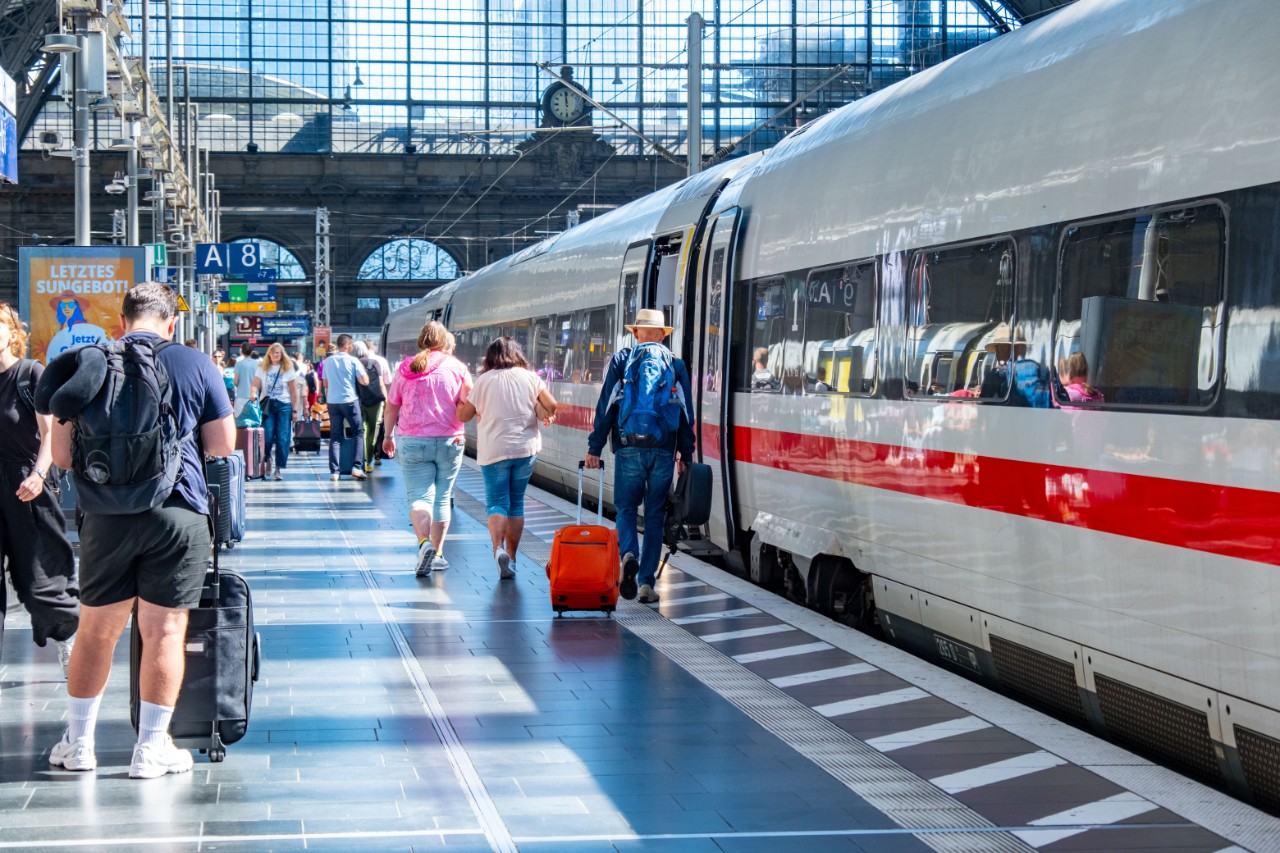
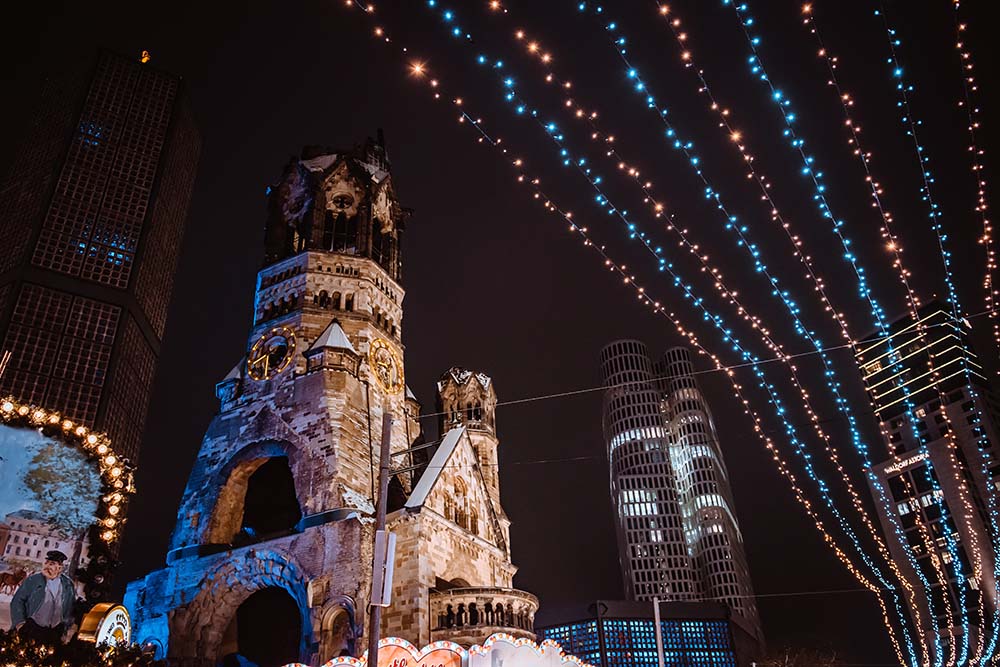
The ICE journey from Frankfurt to Berlin takes around four hours, which rules it out as a day trip but makes it a realistic add-on for guests extending a stay by a night or two. Berlin's mix of contemporary culture and twentieth-century history, from the Brandenburg Gate to the East Side Gallery, rewards at least an overnight stop rather than a rushed afternoon, and the ICE itself is comfortable enough to work from for most of the journey if a laptop needs to come along.
Munich sits a little closer, around three and a half hours by the fastest ICE services and makes for a similarly worthwhile weekend extension. Bavaria's capital pairs well with a stay that already includes business in Frankfurt, whether the draw is the Marienplatz old town, the art collections along Museum Row, or simply a change of pace from Hesse's more corporate energy. Guests travelling for a trade fair sometimes combine the two cities deliberately, closing out a Messe Frankfurt event with a few days further south before flying home from Munich instead of doubling back.
Combining day trips with a trade fair schedule takes a little more planning than a straightforward leisure trip. Messe Frankfurt runs some of the world's largest trade fairs, including Automechanika and the Frankfurt Book Fair, and exhibition days tend to run long, leaving evenings for little more than dinner. The gap days between events, or the day before a fair opens, are usually the better window for a trip like Heidelberg or the Rhine Valley, while a half-day option such as Mainz or Wiesbaden fits more easily around a single free afternoon.
Travelling without a car is straightforward, since every destination in this guide is reachable directly from Frankfurt Hauptbahnhof, and lockers at the station make it easy to drop off a laptop bag or trade fair materials before heading out for the day. Heidelberg in particular gets busy with day-trippers on summer weekends, so a weekday visit, easier to arrange around a fair schedule than most people realise, tends to be the quieter option. A Deutsche Bahn app ticket booked the night before is usually enough, and there is rarely a need to reserve seats on the shorter regional routes to Mainz, Wiesbaden or Heidelberg.
Capri by Fraser Frankfurt sits right next to Messe Frankfurt and around a fifteen-minute walk from Frankfurt Hauptbahnhof, making it a practical base for combining a trade fair schedule with the day trips covered here. Guests attending events at the fairground can walk to sessions directly, while the Pow Wow meeting rooms and Hot Spot business centre keep a workday running even between excursions.
The apartments themselves are built with longer stays in mind, with kitchenettes, ensuite bathrooms and a genuinely different feel to a standard hotel room after a day spent either in meetings or out exploring. The Studio Executive apartments give business travellers extra space to work from, while guests planning to stay well beyond a standard trip can make use of the property's on-site restaurant, bar and 24-hour gym, or expore Frankfurt's virbrant food scene.
Whatever the length of the stay, it's worth checking the property's current offers before booking, particularly around major Messe Frankfurt dates when rates and availability shift.
Cologne and Würzburg are two of the best, each reachable by direct ICE in a little over an hour. Cologne pairs its cathedral with a lively riverside old town, while Würzburg sits at the start of the Romantic Road and makes a good stop for guests planning to travel further into Bavaria.
The Rhine Valley line between Koblenz and Bingen is one of the most scenic stretches of railway in the country, running directly alongside the river past vineyards, the Loreley rock and a string of hilltop castles. It's operated by ordinary Deutsche Bahn regional and ICE services rather than a special tourist train, so no separate booking is needed beyond a standard ticket.
Heidelberg is the one most guests ask about first, and usually for good reason. Its combination of a castle, a well-preserved old town and a direct hour-long train from Frankfurt makes it the easiest full day out to justify, particularly for a first visit.
Yes. The property sits on Europa-Allee in the Europaviertel district, a flat, direct walk from Frankfurt Hauptbahnhof that doesn't require cutting through the station itself. Guests travelling with heavier trade fair materials can also pick up a taxi right outside.
Not comfortably by train, but flying narrows the gap. Frankfurt to Berlin flights take around seventy minutes, with several departures a day, though airport transfers on both ends eat into whatever time is saved over the train. For most guests, an overnight extension still makes more sense than a same-day dash either way.
It's tight but possible if the castle and Altstadt are the only priorities. The funicular up to the castle can mean a twenty to thirty minute queue during busy periods, so guests short on time are often better off taking the footpath up instead, which is a shorter detour than it looks from the old town. Arriving by around 10am, before the castle grounds fill up through late morning, also buys back time that would otherwise go to waiting rather than sightseeing.


Contact Us
42, Europa-Allee, 60327 Frankfurt am Main, Germany