
08 April 2026
Frankfurt has a habit of surprising people. Most visitors arrive expecting glass towers and banking district energy, which is fair, because that is part of it. What takes longer to register is everything else: the medieval square at the heart of the Old Town, the museums gathered along the Museumsufer on the banks of the Main, the traditional Eppelwoi Kneipen in Sachsenhausen that have been pouring Ebbelwoi for generations, and the particular pleasure of a city that contains all of this without making a fuss about it. Sightseeing in Frankfurt moves between centuries and atmospheres in a way that rewards anyone willing to look past the financial reputation.
Capri by Fraser Frankfurt on Europa-Allee sits in the heart of the city, close to Messe Frankfurt and well connected to every major sightseeing area by foot and public transport. Browse accommodation options and current offers to make it your base. This guide covers the essential things to see in Frankfurt, organised by area to make the most of time in the city.
Few city centres in Germany carry as much layered history as Frankfurt's Altstadt. Much of it was destroyed during the Second World War, and what stands today is the result of decades of reconstruction done with genuine care and ambition. Walking through it feels less like a heritage exercise and more like a city that has quietly insisted on remembering itself.
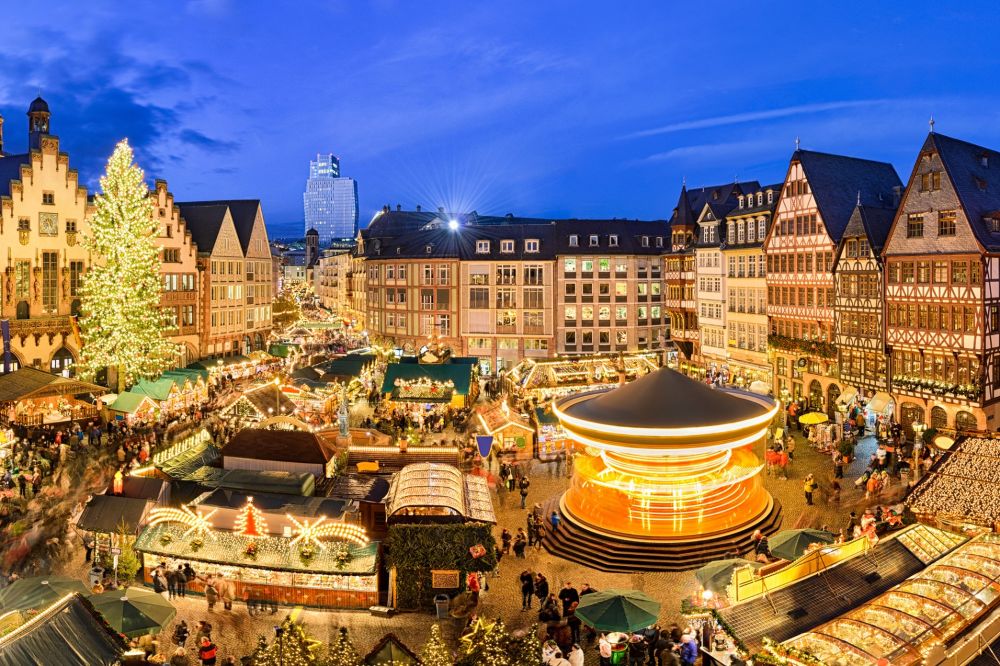
The Römerberg is where Frankfurt's sense of its own history is most visibly concentrated. The Römer, a cluster of three Gothic townhouses that has served as the city's town hall for over 600 years, faces a row of reconstructed half-timbered buildings across the square, with the Fountain of Justice at its centre. Holy Roman Emperors were once celebrated here. Christmas markets have been held here since 1393. Come early in the morning before the crowds arrive, or in the evening when the warm light catches the façades and the square settles into a quieter version of itself.
Adjacent to the Römerberg, the Neue Altstadt is one of the most ambitious urban reconstruction projects in recent German history. Between 2012 and 2018, 35 buildings were rebuilt on the footprint of the medieval town lost in the war, many of them painstaking reproductions of originals that no longer existed. The result is a walkable quarter of narrow lanes, half-timbered houses, independent cafes, and small boutiques that gives a convincing sense of what pre-war Frankfurt looked like. It threads naturally between the Römerberg on one side and Frankfurt Cathedral on the other, making it an easy and rewarding hour on foot.
Frankfurt Cathedral, the Cathedral of St Bartholomew, is where Holy Roman Emperors were elected and crowned for three centuries. The tower is worth climbing for the elevated view over the Old Town, with the rooflines of the Neue Altstadt spread below. A short walk west, St Paul's Church carries a different kind of weight: it was the seat of the Frankfurt Parliament of 1848, the first freely elected German national assembly, and now functions as a civic memorial and exhibition space. Two buildings, close together, that between them account for a significant stretch of European history.
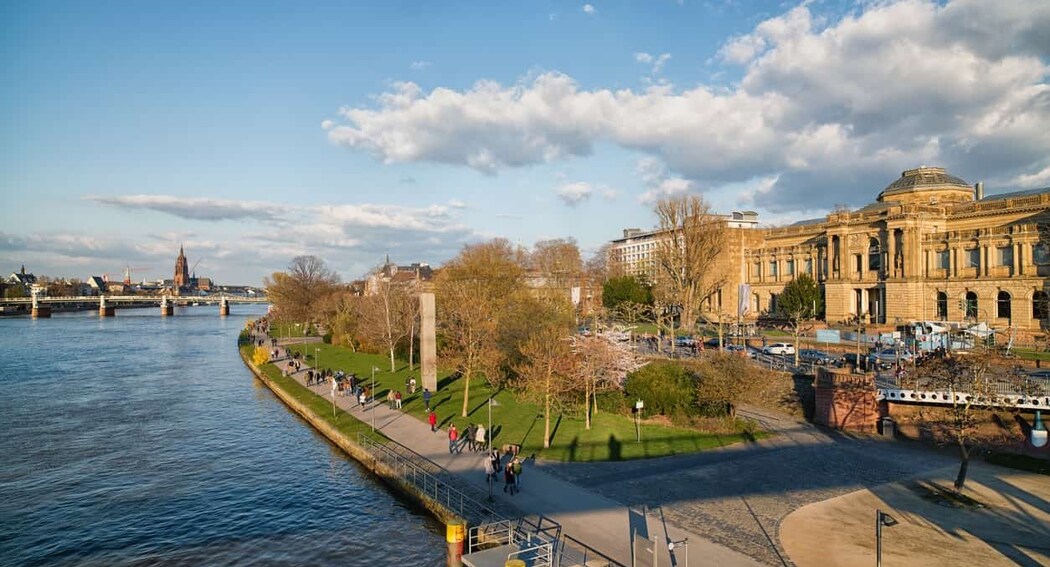
If there is one stretch of Frankfurt that could occupy an entire day without effort, it is the south bank of the River Main. Fifteen museums sit within walking distance of each other along the riverfront, covering art, film, architecture, ethnology, and more. The walk between them is pleasant in its own right, with the Old Town roofline visible across the water throughout. The full breadth of what the district holds is covered in the guide to Frankfurt's best museums.
Suggested image: https://www.istockphoto.com/photo/museum-of-natural-history-senckenberg-frankfurt-hesse-germany-gm1384147802-443629721
The Städel Museum is the anchor of the embankment and one of the most significant art institutions in Germany. More than 3,000 paintings span seven centuries of European art, with Botticelli, Vermeer, Rembrandt, Monet, and Picasso all represented alongside a substantial German collection. There is also a contemporary art wing built underground beneath the museum's garden, which is a quietly impressive piece of architecture in its own right. A half-day here is well spent. A full day is not unreasonable.
The Liebieghaus sits next door to the Städel and holds one of Germany's finest sculpture collections, running from ancient Egypt and Greece through to the Renaissance and Baroque periods, all housed in a 19th-century riverside villa. A short walk further along the embankment, the German Film Museum covers the history and craft of cinema with a permanent collection and a regular programme of temporary exhibitions. Together with the Städel, the three make a coherent and unhurried day along the riverbank, with the view back across the Main to the Old Town available at every pause.
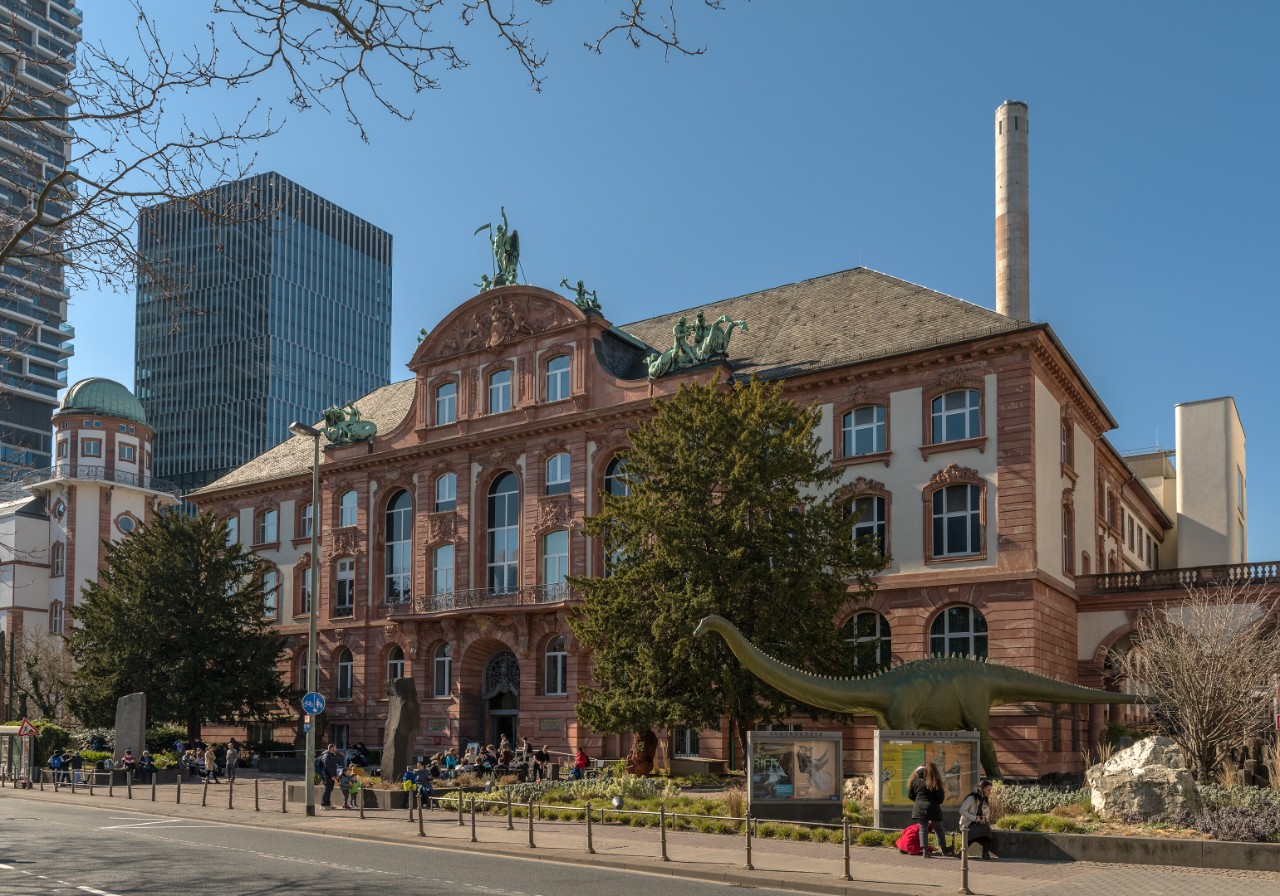
The Senckenberg Natural History Museum sits slightly away from the riverfront museum cluster, but it belongs in any serious Frankfurt sightseeing itinerary. One of Germany’s largest natural history museums, it is especially strong for families and anyone interested in dinosaurs, biodiversity, and natural history. It also broadens the city’s cultural offer beyond the Museumsufer’s art, film, and architecture focus.
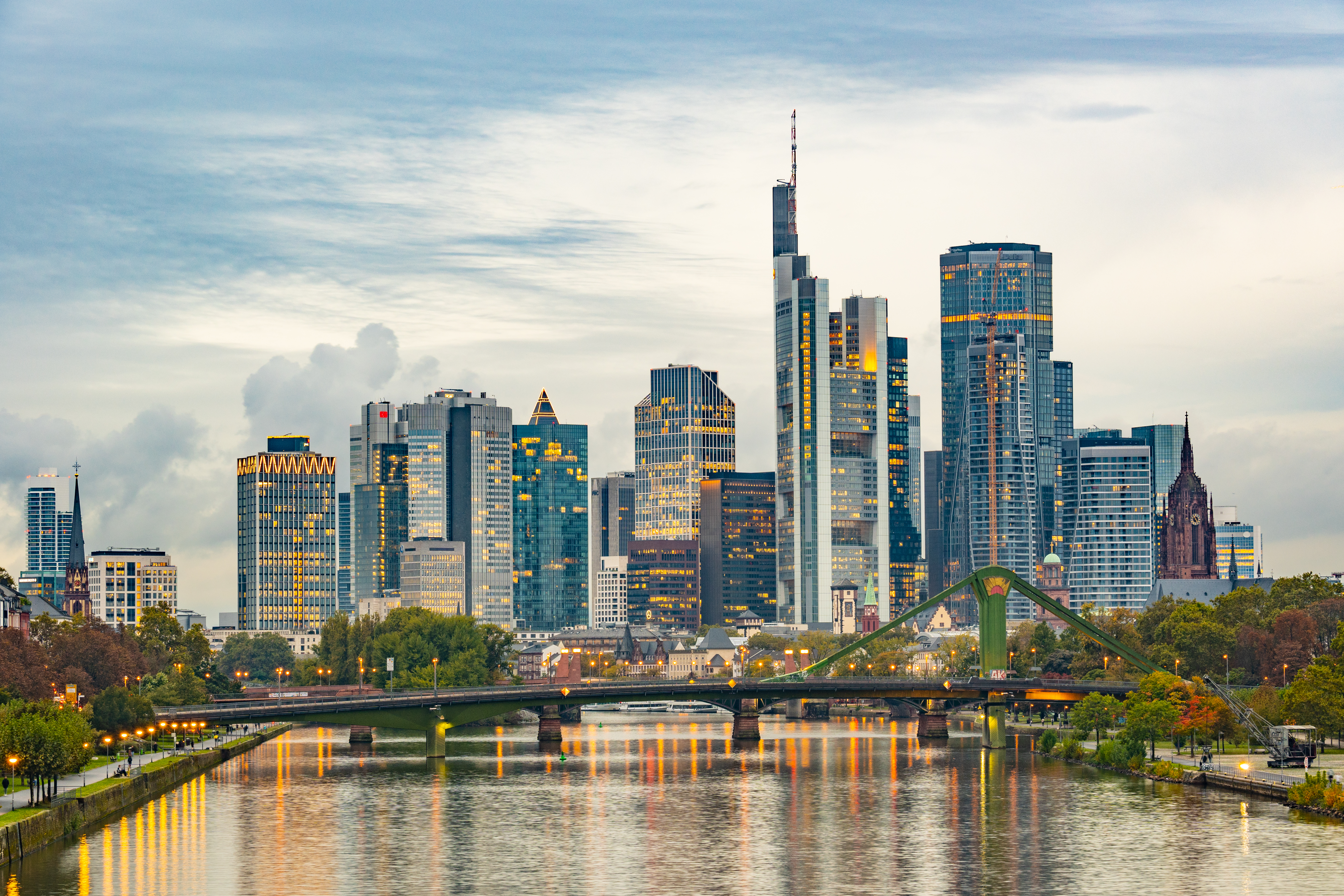
Frankfurt's skyline is Germany's most dramatic, and the difference between seeing it from street level and seeing it from above is considerable. The Main Tower on Neue Mainzer Strasse is the only Frankfurt skyscraper with a public observation deck, at 200 metres with a 360-degree view across the city, the River Main, and on clear days the Taunus hills to the north. Go at dusk if you can, when the glass towers around you begin catching the last of the light and the river below holds the reflection. It is one of those views that is difficult to plan badly. The top Instagram spots in Frankfurt guide covers the best vantage points across the wider city for those who want to keep shooting after dark.
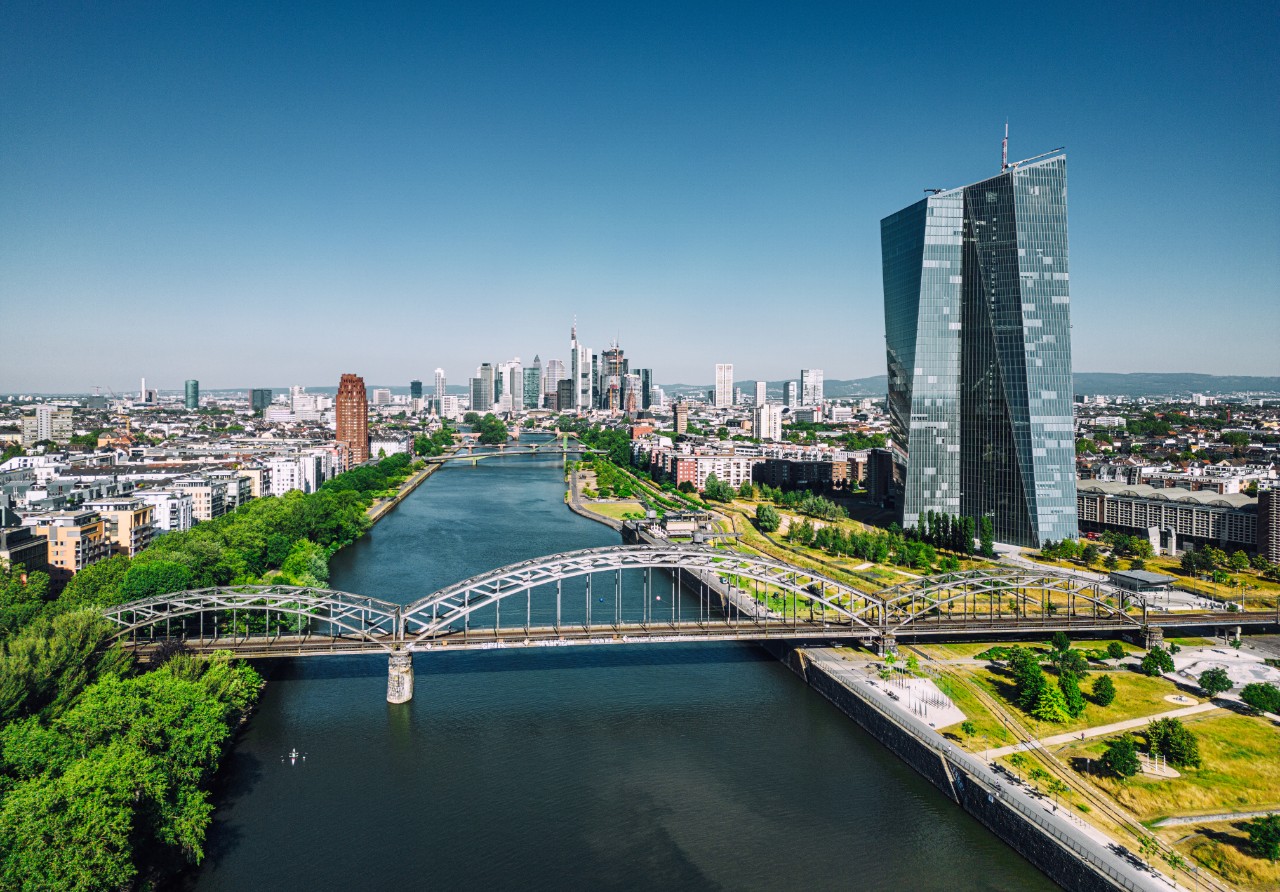
The European Central Bank building in the east of the city adds another distinctive shape to that skyline. Its twin towers rise above the former Großmarkthalle, which was incorporated into the building’s design, making it one of Frankfurt’s most recognisable pieces of contemporary architecture as well as a symbol of the city’s financial role in Europe.
It is one of those views that is difficult to plan badly. The top Instagram spots in Frankfurt guide covers the best vantage points across the wider city for those who want to keep shooting after dark.
Sachsenhausen sits on the south bank of the Main, directly across the river from the Old Town, and offers two of Frankfurt's most rewarding sightseeing experiences in a single neighbourhood. It is also the part of the city that tends to convert the sceptics: the visitors who arrived thinking Frankfurt was all business and leave with a note to return for an evening in an Apfelweinwirtschaft.
Alt-Sachsenhausen is Frankfurt's traditional apple wine neighbourhood, and it feels deliberately removed from the financial district a short distance away. Cobblestone streets are lined with cider taverns where Ebbelwoi is served cold in ribbed stone jugs alongside dishes like Handkäse mit Musik and Grüne Soße, a Frankfurt speciality of seven herbs in a cream sauce that tastes exactly like the city wants you to slow down. The area is liveliest in the evenings, and for anyone wanting to understand what Frankfurt eats and drinks beyond the conference circuit, a few hours here is the most direct route in. The guide to Frankfurt's traditional dishes and markets covers the food culture in more depth.
The Eiserner Steg, or Iron Bridge, has been crossing the Main since 1869, linking the Old Town on the north bank to Sachsenhausen on the south. It is a pedestrian footbridge, which means the only way to use it is to walk, and the walk is worth taking for its own sake. The skyline opens up to the west, the Old Town roofline sits to the east, and the love locks that have accumulated on the railings over the years give the crossing a certain accumulated tenderness. At sunset, with the Mainhattan towers catching the last of the light from the west, it is one of those things that requires no planning and delivers regardless.
For a higher, greener view of the city, the Goetheturm, or Goethe Tower, in the Sachsenhausen city forest is worth the detour. After 196 steps, the 43-metre tower opens onto a panorama of the Frankfurt skyline, the Taunus, the Spessart and the Odenwald, giving a very different perspective from the Main Tower’s city-centre observation deck.
These two stops sit close together in the city centre and reward a single morning spent between them. Neither demands a great deal of time, but both have a way of leaving an impression that outlasts the visit. One offers a window into Frankfurt's most significant literary legacy; the other is simply one of the best covered markets in Germany, and reason enough on its own to be in the neighbourhood.
The Goethe House on Grosser Hirschgraben is the birthplace of Johann Wolfgang von Goethe, and it has been restored to its 18th-century appearance with a care that makes the visit feel more like entering a preserved life than touring a museum. The library where the young Goethe read voraciously, the writing desk at which he began work on Faust, the period furnishings throughout: it is a compact visit, manageable in an hour, and the adjacent Goethe Museum next door provides broader context for those who want to go further into his life and legacy.
The Kleinmarkthalle on Hasengasse has been Frankfurt's covered market hall since 1954, and it remains one of the most animated everyday spaces in the city. Fresh produce, local cheeses, butcher's meat, fish, spices, and prepared food fill a two-storey building where the stalls have a permanence and personality that distinguishes them from anything more recently assembled. The upper gallery runs to wine and snack bars where eating standing at the counter is the expected mode. It opens Monday to Friday until 6pm and Saturday until 4pm. A late Saturday morning, with no particular plan beyond working through what looks good, is the best possible version of the visit.
Capri by Fraser Frankfurt is on Europa-Allee in the Gallusviertel, next to Messe Frankfurt and within easy reach of the city's main sightseeing areas by foot and public transport. The Goethe House is approximately 2.5 kilometres from the property, the Römerberg around 3 kilometres, and the Städel Museum reachable via the U-Bahn in under fifteen minutes.
The accommodation comprises 153 studio and one-bedroom apartments, each with a fully equipped kitchenette, entertainment system, and dedicated workspace. On-site facilities include the Caprilicious all-day dining restaurant, the Drinx cocktail bar, a 24-hour gym, the Spin & Play launderette, and secure underground parking. The Skyline Plaza shopping centre is a three-minute walk from the property. For guests combining sightseeing with business, the property's Pow Wow meeting rooms accommodate up to 50 delegates with catering available. For those planning a longer visit, long-stay options are designed around the rhythms of living in Frankfurt rather than simply passing through. View current offers to plan your stay.
Start with the Römerberg and the Römer town hall, which together form the historical heart of the Old Town. The Neue Altstadt connects them to Frankfurt Cathedral through one of the most carefully reconstructed medieval quarters in Germany. The Main Tower observation deck is the best place to understand the scale of the skyline. The Städel Museum on the Museumsufer is the essential cultural stop. And Sachsenhausen with the Eiserner Steg rounds out the picture for anyone wanting to see the city beyond its landmarks.
Two to three days covers the main sightseeing landmarks comfortably without feeling rushed. A first full day works well across the Old Town, Römerberg, Neue Altstadt, and Frankfurt Cathedral, finishing with an evening in Sachsenhausen. A second day is well spent on the Museumsufer museums, the Main Tower, and the Goethe House. A third day opens up the Palmengarten botanical garden, the Senckenberg Natural History Museum, the neighbourhood character of areas like Berger Strasse, and Lohrberg, home to Germany’s smallest vineyard and one of Frankfurt’s more unexpected skyline views. For a shorter stay, the Frankfurt weekend breaks article covers the essential priorities.
Very much so, though it asks more of the visitor than a city like Munich or Cologne, where the appeal announces itself quickly. Frankfurt's rewards are distributed across neighbourhoods and require a willingness to move between them. Get that right and you have a rebuilt medieval Old Town, a world-class museum embankment, a skyline unlike anything else in Germany, and Sachsenhausen waiting at the end of the day with cold cider and no particular interest in impressing anyone.
The Old Town and the Museumsufer are the two most concentrated areas, accessible on foot from each other across the Eiserner Steg. The Main Tower is a short walk west through the financial district. Sachsenhausen on the south bank combines the museum embankment with the cider tavern quarter and is best explored without a fixed itinerary. Capri by Fraser's location near Messe Frankfurt connects well to the city's public transport network for reaching all of these efficiently.
The Römerberg and Neue Altstadt, Frankfurt Cathedral, the Main Tower, the Eiserner Steg and Sachsenhausen, and the Städel Museum are the core of a first visit. The Kleinmarkthalle and the Goethe House are compact enough to fit into the margins of a day built around the larger landmarks. For a fuller picture of what the city offers, the guide to the top 10 things to do in Frankfurt covers the rest.


Contact Us
42, Europa-Allee, 60327 Frankfurt am Main, Germany