

09 June 2026
South Kensington does not announce itself the way other parts of London do. There is no single landmark or famous street that defines it from the outside; what you find instead, once you are actually walking the neighbourhood, is a density of serious cultural institutions, handsome Victorian terraces, narrow mews and green space that few other areas of the capital can match. It is one of those parts of London that rewards the guest who walks rather than the one who moves between Underground stops.
The area’s great advantage for Kensington sightseeing is that almost everything of significance is within walkable distance of everything else. The Natural History Museum, the Victoria and Albert Museum, the Science Museum, the Royal Albert Hall and Kensington Palace are all connected by a route that takes less than thirty minutes end to end on foot, with Kensington Gardens extending the walk northward through some of the finest parkland in central London. Fraser Suites Kensington at 75 Stanhope Gardens sits at the southern edge of this corridor, placing guests within easy walking distance of the area’s main sights, with current offers worth checking before you book.
South Kensington’s museum quarter has a name that most visitors never encounter but that explains the neighbourhood’s unusual concentration of cultural institutions in a single corridor. Albertopolis, coined in the 1850s in honour of Prince Albert, refers to the cluster of museums, concert halls and educational institutions built with the profits of the Great Exhibition of 1851. Albert’s vision was a campus of public culture and scientific learning laid out along Exhibition Road, and the result is one of the most ambitious cultural projects ever built in Europe, most of which remains free to enter today.
Exhibition Road itself is the natural axis of any Kensington sightseeing walk. Redesigned in 2012 as a shared pedestrian and vehicle surface, it runs from South Kensington tube station northward to the edge of Hyde Park, with the Natural History Museum and the Science Museum on the west side and the V&A on the east. The Natural History Museum, with Alfred Waterhouse’s Romanesque terracotta facade stretching along Cromwell Road, is as impressive from the outside as it is within. Inside, the blue whale suspended in the central Hintze Hall and the dinosaur skeleton in the Earth Hall are the crowd-drawing highlights. The Darwin Centre and the Vault, which displays the museum’s gem and mineral collection, reward visitors who move beyond the main galleries. Entry is free, though a timed entry slot booked online in advance is required.
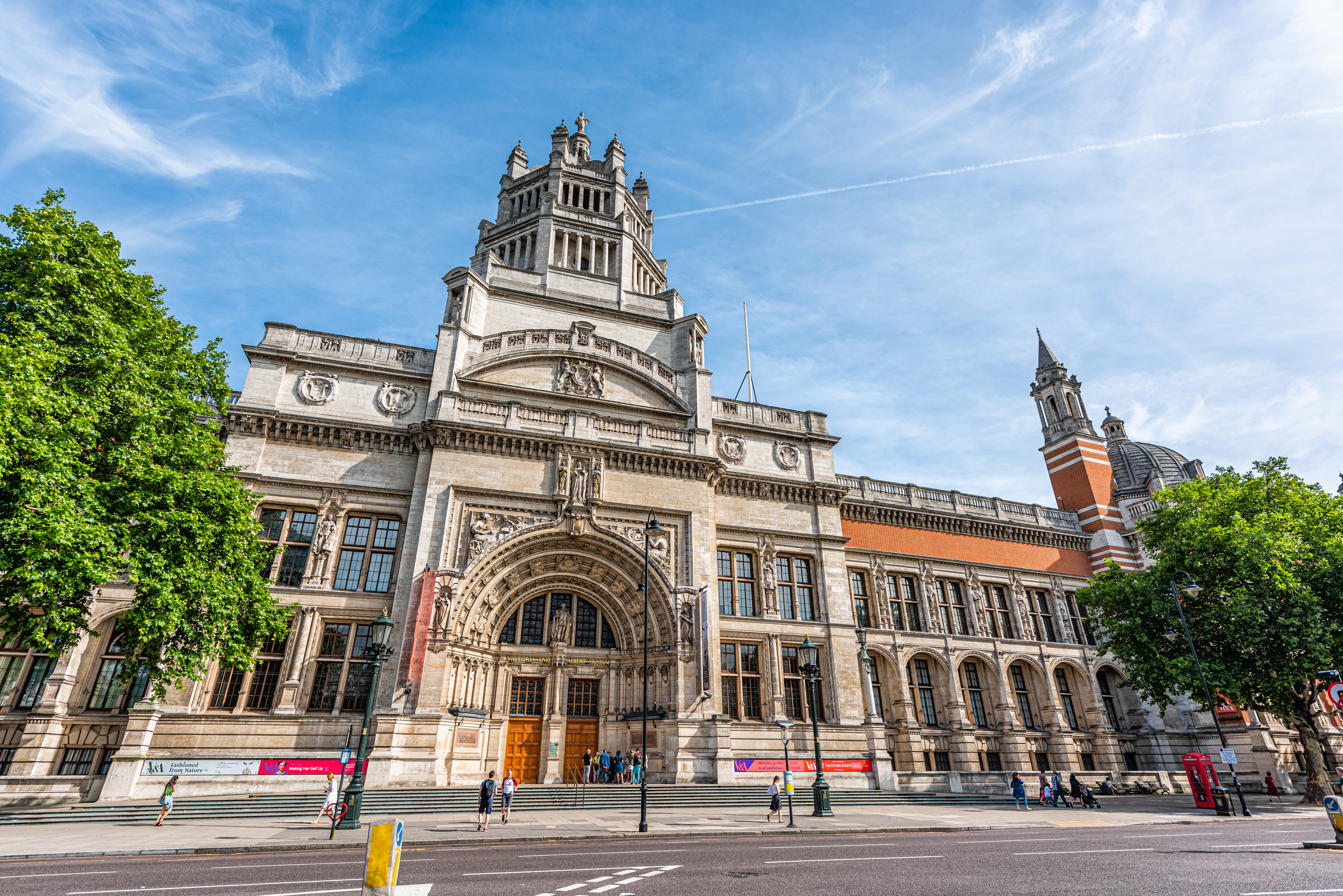
The Victoria and Albert Museum directly across the road holds the national collection of art and design, spanning 5,000 years across 145 galleries. The scale is difficult to absorb in a single visit, so it rewards return trips around specific collections: the Cast Courts, which contain full-scale plaster reproductions of Trajan’s Column and Michelangelo’s David; the Fashion gallery; and the recently expanded South Asian collection. The V&A also runs regular free guided tours of its building and collections, which are worth timing your visit around.
The Science Museum on Exhibition Road completes the trio and offers a different kind of experience: hands-on, accessible and organised around themes of innovation and discovery. The Flight gallery, with its collection of historic aircraft suspended from the ceiling, and the Making the Modern World gallery, which charts industrial progress through original artefacts, are the standout permanent exhibitions. Entry is free; some special exhibitions carry a charge.
Kensington sightseeing does not begin and end on Exhibition Road. The area around it contains some of the most characterful walking streets in London, and the mews streets, house museums and gardens of the neighbourhood give it a layered quality that repays an unhurried pace. What distinguishes a well-planned set of Kensington walking tours from a simple museum visit is the chance to move between these different textures within a single half-day route.
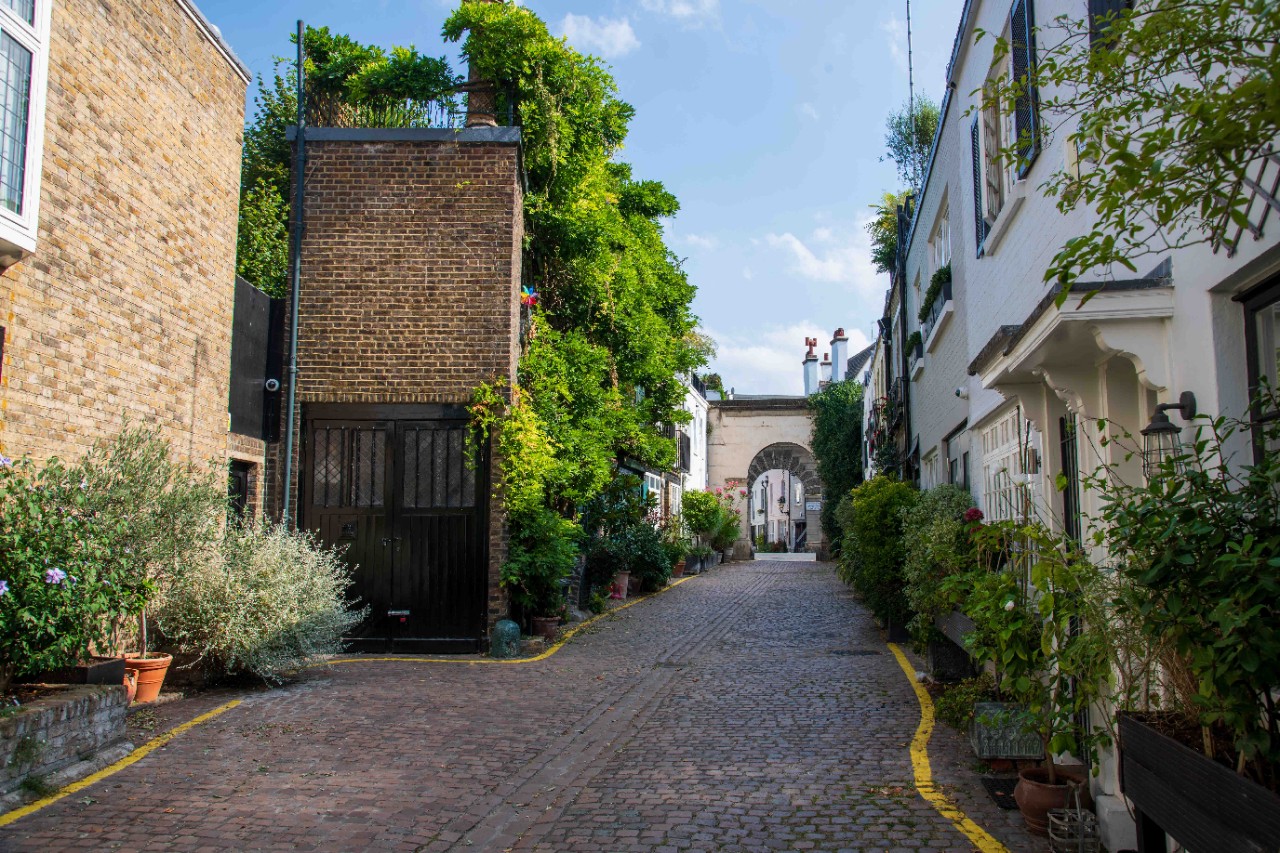
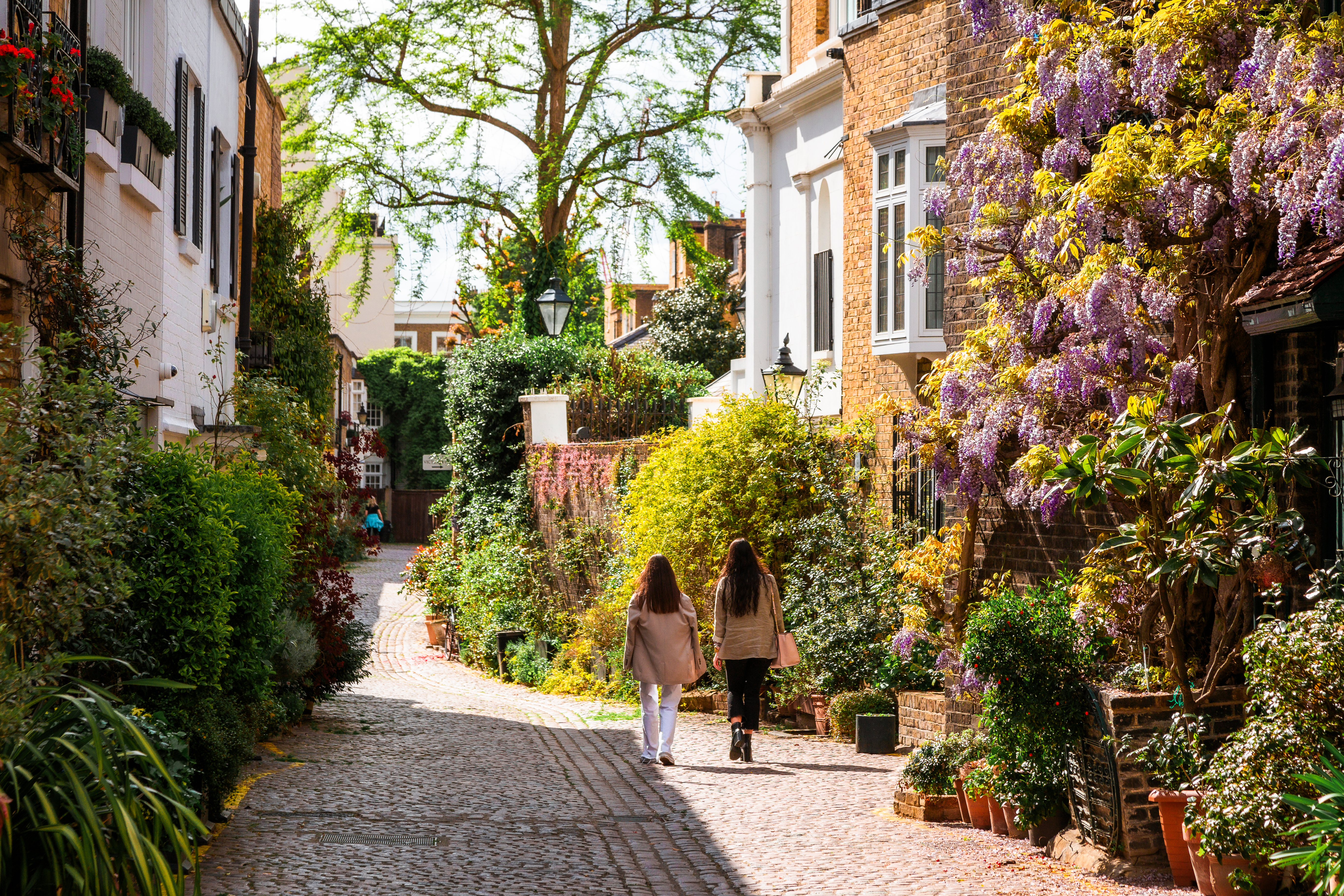
The mews streets that run off Gloucester Road and Stanhope Gardens represent a distinct urban texture: narrow cobbled lanes originally built as stable rows, now among the most sought-after residential addresses in London. Kynance Mews, a few minutes north of Gloucester Road tube station, is particularly well preserved, with its arched entrance and painted stucco fronts. The lanes reward slow exploration: each one tends to have its own character, and together they give a sense of the residential Kensington that lies just behind the main streets.
Leighton House on Holland Park Road is a short walk west and is one of the more extraordinary house museums in London. Built by the Victorian painter Lord Frederic Leighton between 1866 and 1895, it centres on the Arab Hall, a domed room tiled with Islamic ceramics collected from Damascus, Cairo and Rhodes. The effect is unlike anything else in London and the house museum gives a vivid picture of artistic life in Victorian Kensington. Admission applies; booking in advance is recommended.
A self-guided Kensington walking tour that begins at South Kensington tube station, follows Exhibition Road north through the museum quarter, turns into Prince Consort Road past the Royal Albert Hall, continues into Kensington Gardens to the palace and returns through the mews streets around Gloucester Road covers the neighbourhood’s main points of interest in around three to four hours at a comfortable pace. Free Tours by Foot runs a guided Royal Kensington tour covering a similar route, which suits visitors who want historical context supplied by a guide rather than self-navigated.
The walk north from Exhibition Road into Kensington Gardens is one of the most rewarding pieces of Kensington sightseeing available without paying an entrance fee. The gardens are open daily and free, with the Albert Memorial, the Serpentine Gallery and the Round Pond all sitting along or just off the main path through the park. The Albert Memorial, commissioned by Queen Victoria after Prince Albert’s death in 1861 and opened in 1872, stands 176 feet tall and remains one of the most elaborate Victorian monuments in London. It is a natural stopping point on any Kensington tours route through this part of the city.
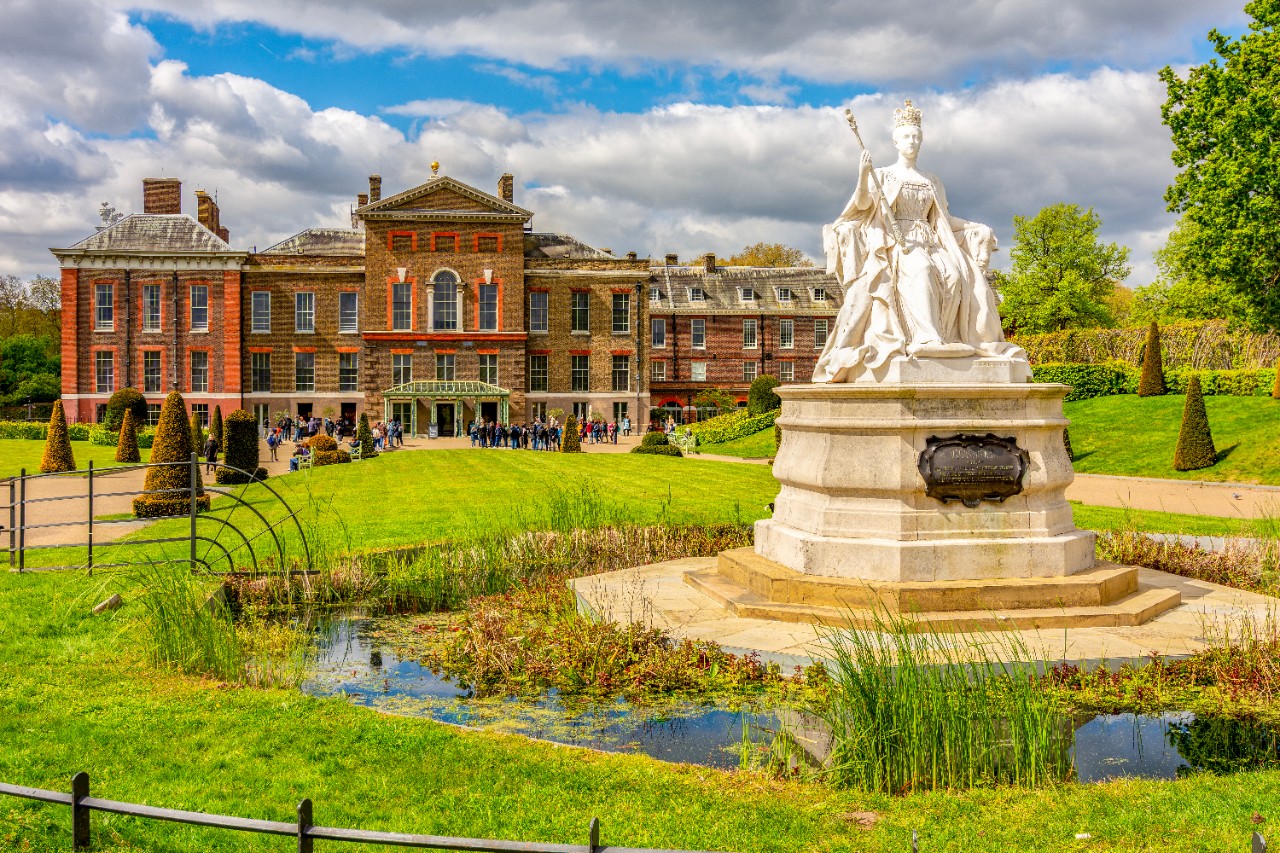
Kensington Palace has been a working royal residence since 1689 and is the birthplace of Queen Victoria. The State Rooms are open to the public through immersive exhibitions covering the palace’s royal history, with the King’s Gallery among the highlights. Note that the Queen’s State Apartments are closed from 15 June 2026 for major refurbishment work. The Sunken Garden beside the palace, a formal pool surrounded by pleached lime trees, is particularly worth visiting in summer when the planting is at its best. The palace is open Wednesday to Sunday; advance booking is recommended, particularly at weekends and during school holiday periods.
Fraser Suites Kensington at 75 Stanhope Gardens occupies a beautifully restored Victorian property set within a 2.5-acre private garden square. Gloucester Road Underground station is a three-minute walk away, giving guests direct connections to the Circle, District and Piccadilly lines. The Natural History Museum, the V&A and the Science Museum are all within a ten-minute walk. Hyde Park, the Royal Albert Hall and Kensington Palace are within easy reach.
The accommodation comprises 69 studios and apartments across one, two and three-bedroom configurations, each with a fully equipped kitchen, generous living areas and the kind of space that makes a Kensington stay feel notably different from a standard hotel room. The private garden is available to all guests and provides a calm outdoor space that is unusual for a central London property. Families are particularly well served, with children’s facilities and separate living and dining areas in the larger apartments. View current offers before booking.
The Natural History Museum on Cromwell Road is free to enter and open daily from 10am to 5:50pm, with last entry at 5:30pm. Visitors are required to book a free timed entry slot online in advance; walk-in access is not guaranteed, particularly on weekends and during school holidays. Some special exhibitions carry a separate admission charge. The museum is closed on 24 to 26 December.
Booking in advance is strongly recommended, particularly at weekends and during the summer school holiday period. Tickets are available through the Historic Royal Palaces website. The palace is open Wednesday to Sunday and closed on Mondays, Tuesdays and 24 to 26 December. Note that the Queen’s State Apartments are closed from 15 June 2026 for major refurbishment work.
Walking from South Kensington tube station to Kensington Palace via Exhibition Road, Prince Consort Road and Kensington Gardens takes around 25 to 30 minutes at a steady pace without stopping. With time spent in one or two museums and a pause at the palace gardens, a full day can comfortably be built around this route. Most visitors find the museum quarter alone warrants at least a full morning.
South Kensington is straightforwardly connected by tube from most parts of central London. South Kensington station is served by the Circle, District and Piccadilly lines, and Gloucester Road station is a short walk north with the same connections. Journey time from King’s Cross is around 20 minutes; from London Bridge, around 25 minutes. The Piccadilly line provides a direct connection to Heathrow Airport in around 45 minutes.
Several operators run guided walking tours covering Kensington’s royal and cultural history. Free Tours by Foot offers a Royal Kensington guided tour starting from Kensington High Street, taking in Kensington Palace, the Albert Memorial, the Royal Albert Hall and the museum quarter. The London Walks company runs a Thursday and Saturday guided walk of Old Kensington departing from High Street Kensington tube station, covering the area’s Victorian history, artists’ quarter and royal connections in around two hours.