

23 June 2026
Hamburg gave its newest landmark a nickname before it even opened, which tells you something about how this city talks about buildings. Elphi, everyone calls it, with the kind of easy shorthand usually reserved for old friends rather than a concert hall that spent a decade in the local papers for all the wrong reasons. Ask a Hamburger about the Elbphilharmonie now, though, and the tone shifts entirely: pride, mostly, and a fair bit of relief.
For visitors staying at Fraser Suites Hamburg, the Elbphilharmonie concert hall in Hamburg, Germany, sits close enough to become part of an evening rather than an excursion, a short stretch along the harbourfront from the hotel's heritage Rödingsmarkt address. The apartment-style accommodation makes it an easy base for exploring HafenCity at a slower pace, whether the plan is a concert, an afternoon on the public viewing platform, or simply seeing the building up close.
Ask about the Elbphilharmonie's construction and most Hamburg residents will laugh before they answer. The project ran a decade over its original timeline and swallowed sums that became a standing local joke long before the building was finished.
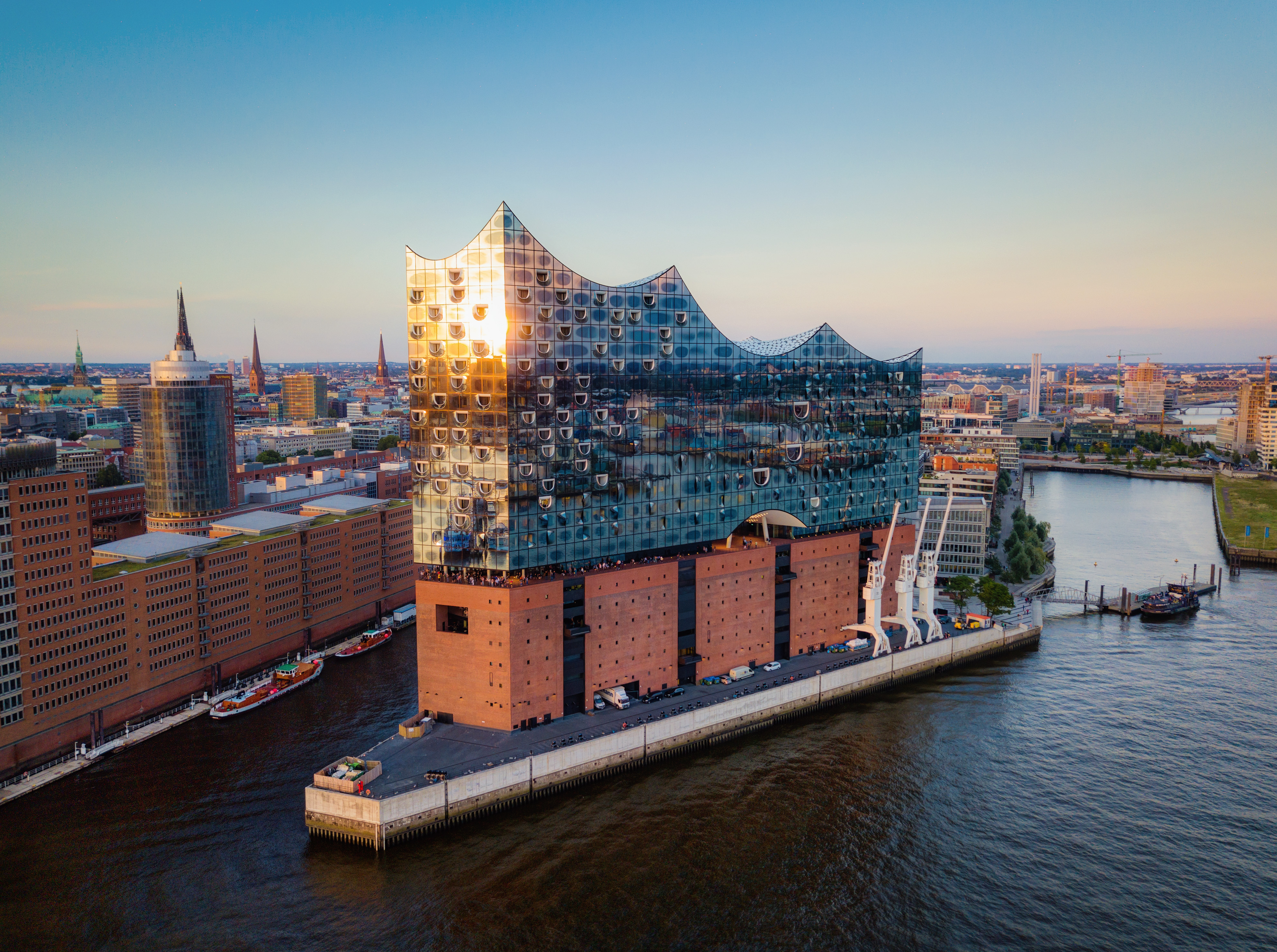
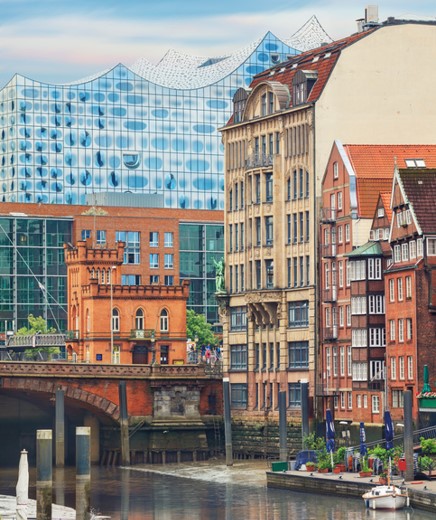
The Elbphilharmonie rises from Kaispeicher A, a brick warehouse built in the 1960s to store cocoa beans on the Grasbrook peninsula. Rather than clear the site, architects Herzog & de Meuron kept the warehouse's heavy base intact and built a vast new glass structure directly on top of it, pairing old brick against a strikingly modern crown. The result reads as two buildings in conversation, one solid and industrial, the other almost weightless above it.
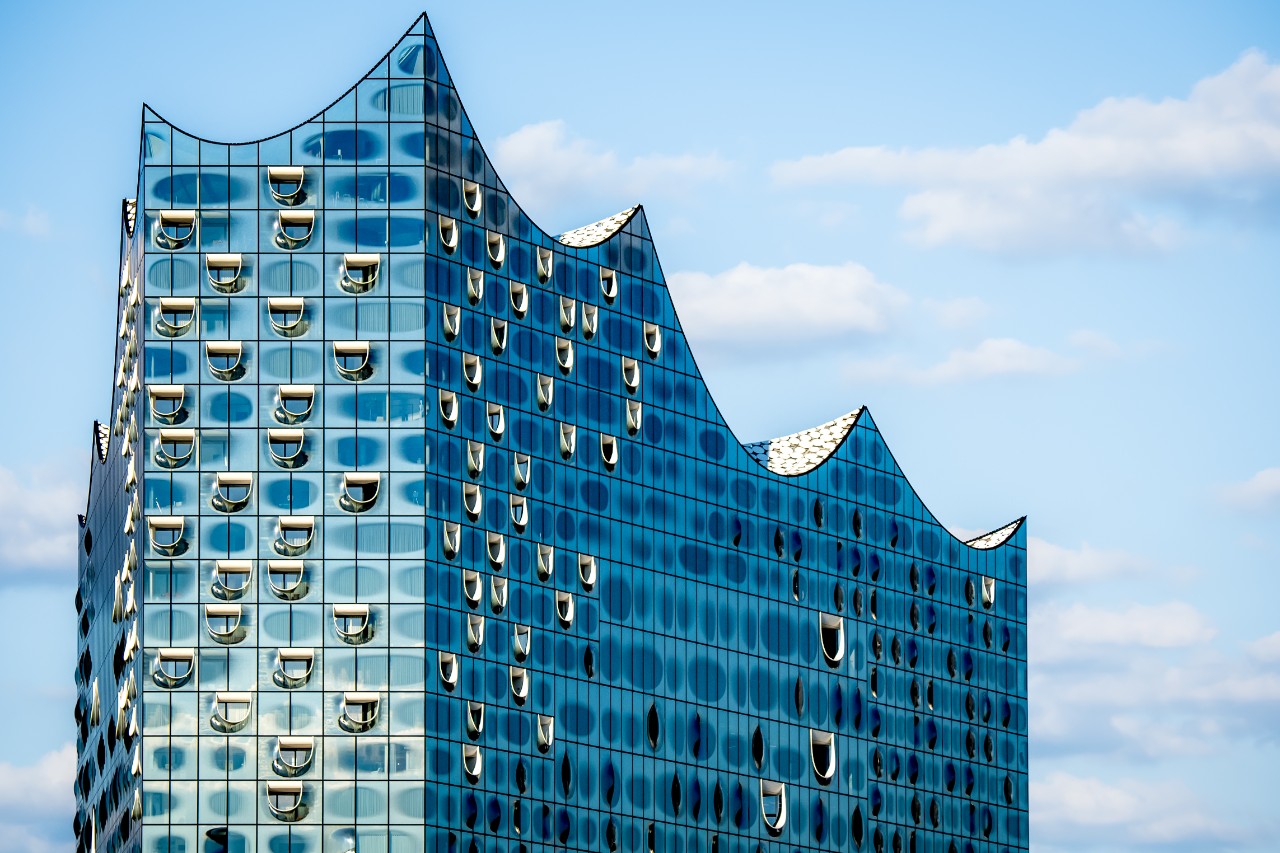
Look closely at the glass and the building reveals a level of detail that's easy to miss from a distance. The facade shimmers and shifts colour depending on the weather and time of day, its roofline folding into waves that echo the sails and shipping containers of the harbour below. Above it, the roofline is made up of eight large curved surfaces studded with around 6,000 small reflective elements, so that even a passing cloud sends light rippling across it.
What began in 2007 as a modest addition to the warehouse, budgeted at around €241 million and due to open in 2010, became one of Europe's most notorious construction sagas. Costs climbed year on year through contract disputes and design changes, construction halted entirely for a period in 2011, and the final bill on completion in 2016 came to roughly €866 million, more than ten times the original estimate.
The Elbphilharmonie finally opened on 11 January 2017 with a performance by the NDR Elbphilharmonie Orchestra. Hamburg's relationship with the building has softened considerably since; most locals now speak of the delays the way you'd mention an old family disagreement, mildly, and usually followed by real pride in how it turned out.
The building has grown into more than a concert hall in the years since. Its upper floors house a hotel and private apartments, while the Kaistudios, spread across two floors, run music education programmes and workshops open to visiting families and school groups, a use of the building most first-time visitors never think to look for.
The approach starts inside the old warehouse itself, through a doorway that gives no hint of what's above it. A long, gently curved escalator, one of the longest in Western Europe, carries visitors up through the brick shell before the space suddenly widens out into the Plaza, a free public viewing platform roughly 37 metres above the water. It wraps around the building at the point where old brick meets new glass, and from here Hamburg's port, the Speicherstadt rooftops and the container terminals downriver all lay themselves out at once.
A ticket is required to access the Plaza, but admission is free of charge. Timed entry slots help manage visitor numbers when the area is busy. Come early morning or late afternoon and the platform empties out, the harbour light turning soft and low across the water, exactly the kind of hour photographers seek out without needing to be told.
The Grand Hall's acoustic reputation is not marketing. Renowned acoustician Yasuhisa Toyota, who also shaped Tokyo's Suntory Hall and the Walt Disney Concert Hall in Los Angeles, spent years developing what's known as the White Skin: over 10,000 individually milled gypsum fibre panels lining the walls and ceiling, each shaped to scatter sound precisely toward its 2,100 seats. The hall follows a vineyard layout, with the stage set at the centre and seating rising in terraces around it, so no seat sits especially far from the performers.
The Grand Hall is home to the NDR Elbphilharmonie Orchestra, whose residency anchors much of the classical programme, alongside visiting orchestras and soloists from across Europe. For something more intimate, the Recital Hall, a smaller shoebox-shaped space seating up to 550, hosts chamber music, lieder and solo recitals with a warmth that suits smaller ensembles particularly well.
The same Recital Hall turns over to jazz, world music and contemporary programming on other nights, reflecting a broader shift in how concert halls now treat these genres, less as an occasional booking and more as part of the core season. Popular performances across all genres tend to sell out well ahead of time, a reflection of just how packed the Elbphilharmonie's calendar has become since opening. For a different side of the city's musical life, Hamburg's live music scene runs from Beatles-era St. Pauli clubs to intimate jazz basements.
The Elbphilharmonie sits inside HafenCity, a district that's spent the past two decades transforming a disused stretch of docklands into what's often described as Europe's largest inner-city development, and the contrast with neighbouring Speicherstadt, a UNESCO World Heritage warehouse district since 2015, is part of what makes a walk through here so interesting. Where Speicherstadt is all soot-dark brick and narrow canals, HafenCity opens out into wide promenades, glass-fronted apartment blocks and public squares built directly onto the water.
The Magellan-Terrassen, a set of broad steps leading down to the harbour basin near the Elbphilharmonie, make a good spot to sit with a coffee and watch the ferries come and go. For dinner nearby, HafenCity's newer restaurant scene has grown up around the concert hall itself, with several kitchens along the waterfront now built specifically around the after-concert crowd, worth booking ahead on performance nights.
From Fraser Suites Hamburg's Rödingsmarkt address, the walk to the Elbphilharmonie follows the water through Speicherstadt, taking in the warehouse district's canals and bridges along the way, roughly twenty minutes at an unhurried pace. The HVV ferry line 72 offers a pleasant alternative, running to a stop directly beside the building and giving a proper view of the Elbphilharmonie from the water before you've even arrived. Either way, the return walk after an evening concert, with the building lit up behind you, is one of Hamburg's better ways to end a night out.
For those seeking a 5* stay in Hamburg, Fraser Suites Hamburg offers the perfect accommodation. Centrally located, our luxury property provides easy access to public transport, local shopping areas, and cultural attractions, making it an ideal choice for anyone planning to embrace living in Hamburg. Whether you're moving to the city for work or simply looking for a comfortable home base, Fraser Suites Hamburg offers a blend of comfort, convenience, and luxury to suit all your needs.
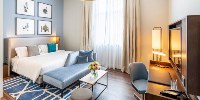
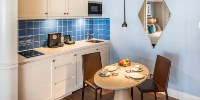
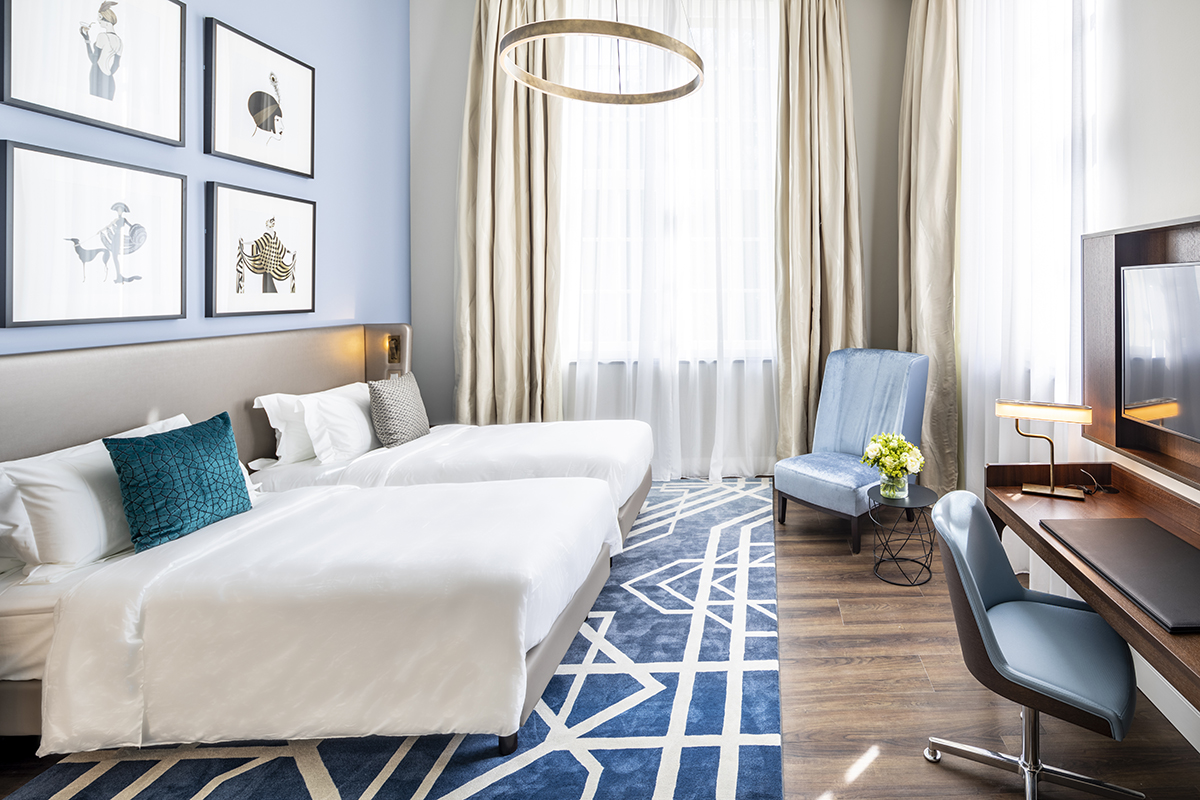
The property features spacious apartments, thoughtfully designed for long-term living. Each apartment is equipped with modern amenities, including a fully equipped kitchenette, a cosy living area, and a dedicated workspace, making it the ideal choice for those adjusting to the cost of living in Hamburg. The contemporary furnishings and stylish interiors create a welcoming environment, whether you’re unwinding after work or entertaining guests.
Frasers Suites Hamburg also boasts a range of excellent facilities, including a fitness centre for staying active, a business lounge for remote work, and 24/7 concierge services to assist with any needs. High-speed Wi-Fi is available throughout the property, ensuring you remain connected, while the communal areas and support from the dedicated staff offer a home-like feel, essential for those living in Hamburg for the long term. The combination of luxury amenities and a central location ensures that Frasers Suites Hamburg is an exceptional choice for anyone looking to make the city their home.
Fraser Suites Hamburg occupies a listed early twentieth-century building at Rödingsmarkt, its Art Deco-influenced interiors a fitting complement to an evening spent among HafenCity's more contemporary architecture. Rooms range from the compact Deluxe Room, suited to a single night after a concert, up through the Deluxe Suite and the One Bedroom Deluxe Suite, both with kitchenettes and separate living space for guests wanting to settle in properly.
For those comparing hotels near the Elbphilharmonie or apartment-style accommodation in the area, Fraser Suites Hamburg's blend of heritage character and self-catering suites sets it apart from the newer HafenCity hotels closer to the concert hall itself. Guests planning a longer stay to take in Hamburg's cultural calendar in full can also make use of the property's extended-stay rates, while the hotel's facilities include the Quintessenz restaurant, worth considering for a pre-concert dinner given the short journey onward from Rödingsmarkt. Book your stay at Fraser Suites Hamburg and make the Elbphilharmonie part of your evening in the city.
Elbphilharmonie is a compound of "Elbe," the river the building sits beside in Hamburg's HafenCity district, and "Philharmonie," the German word for a concert hall or philharmonic orchestra's home venue. Together the name translates roughly as "Elbe Philharmonic Hall."
The Elbphilharmonie was designed by the Swiss architecture firm Herzog & de Meuron, founded by Jacques Herzog and Pierre de Meuron, who were awarded the commission in 2003. Herzog & de Meuron's other notable projects include the Tate Modern in London and the Bird's Nest stadium built for the Beijing Olympics.
The Elbphilharmonie's facade is made up of around 1,100 individually shaped glass panels, no two exactly alike, some flat and some subtly curved. Each is printed with a pattern of small dots that varies in density from panel to panel, a technique known as fritting, which shades the interior from direct sun and gives passers-by outside a degree of privacy without the glass appearing opaque.
No, there is no formal dress code at the Elbphilharmonie. According to the venue's own visitor guidance, smart dress is welcome but jeans and casual clothing are equally acceptable, and comfort is considered more important than formality. In practice, audiences tend to dress a little smarter for evening performances by the resident NDR Elbphilharmonie Orchestra in the Grand Hall than for jazz or contemporary programming in the smaller Recital Hall.
The Grand Hall sits around 50 metres above ground level, considerably higher than the free public Plaza viewing platform below it. The building reaches 108 metres at its highest point overall, the Kaispitze, making the Grand Hall roughly midway up the full height of the structure.



Contact Us
Intersection Olaya Street and Khurais Road 11524, Riyadh, Al Olaya, Kingdom of Saudi Arabia