
11 February 2026
Few cities in Europe wear their architectural ambition as openly as Glasgow. The sandstone facades that line the Victorian grid, the singular designs of Charles Rennie Mackintosh, the raw concrete of the post-war decades, and the dramatic contemporary structures along the Clyde all tell the story of a city that has always built with conviction.
Described by the poet John Betjeman as the finest Victorian city in the world, Glasgow rewards those who look up, slow down, and pay attention to the details carved into its streets. Fraser Suites Glasgow, housed within a beautifully renovated 1850s Victorian building on Albion Street in the Merchant City, puts guests at the centre of the city's built heritage from the moment they arrive.
To understand Glasgow's architecture is to understand its history as a city that grew rich quickly and spent lavishly on stone. From the mid-nineteenth century, trade, industry, and the wealth of empire transformed what had been a modest Scottish burgh into one of the great manufacturing and commercial cities of the world. The buildings that resulted were expressions of that confidence, built in sandstone quarried from the surrounding region and designed to last.
The grid-iron street plan of the city centre, unusual in a British city, gave architects a rational framework within which to work. What they produced was remarkable in its consistency and its quality. Every major building type in Victorian Glasgow, from banks and insurance offices to warehouses, churches, and civic halls, was treated as an opportunity for architectural statement. The cumulative effect, particularly in the area around George Square and along the axes of Buchanan Street and Ingram Street, is of a city that took its own importance very seriously.
The wealth behind this building came partly from legitimate industry and partly from a darker history of participation in the Atlantic trade. The merchants who built the Merchant City accumulated capital through tobacco and related commerce, and the district's elegant eighteenth-century warehouses and townhouses were funded by that wealth. The area now best known for its bars, galleries, and creative businesses was originally the commercial heart of a mercantile economy that reached far beyond Scotland.
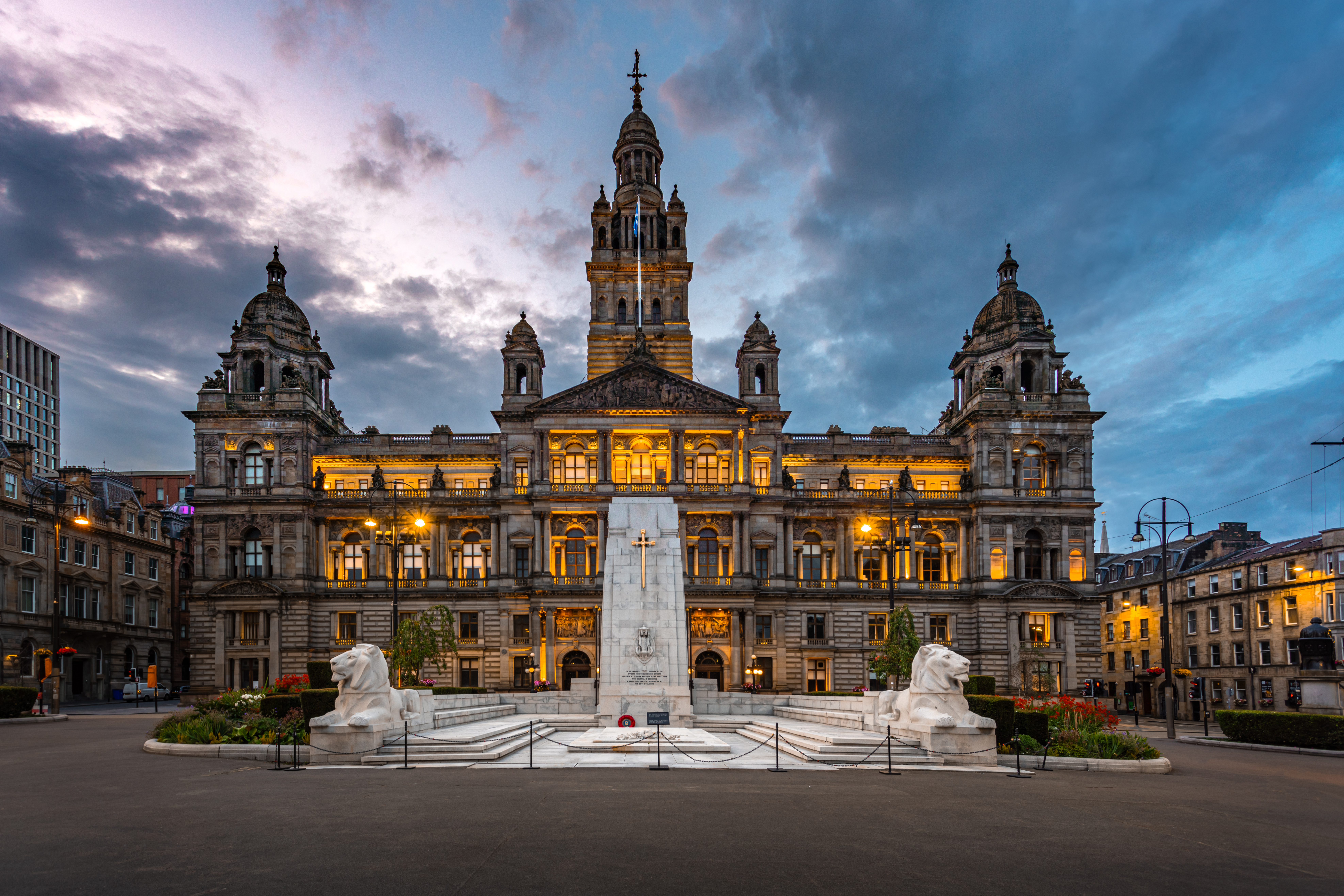
George Square is the civic heart of the city and the City Chambers, completed in 1888, is its most theatrical building. Designed by William Young after a public competition, it combines Italian Renaissance and Baroque influences into a structure of extraordinary richness. The interior surpasses even the facade: a grand staircase of Carrara marble, mosaic ceilings, gold leaf detailing, Spanish mahogany panelling, and stained glass across multiple floors. Public tours are available and offer access to spaces that rarely disappoint, even for those with only a passing interest in Victorian architecture.
Glasgow Cathedral, on the eastern edge of the city centre, is the oldest building in Glasgow and one of the most complete medieval cathedrals in Scotland. Construction began in the twelfth century, and the building survived the Reformation largely intact, which is rare for Scotland. The Gothic interior, with its forest of ribbed vaulted ceilings and the atmospheric lower church beneath the choir, rewards careful exploration.
A short walk uphill brings you to the Necropolis, a Victorian garden cemetery of great architectural interest, with monuments and mausoleums drawing on Greek, Egyptian, and Gothic revival styles. The views from the summit back over the cathedral and the city are among the best in Glasgow.
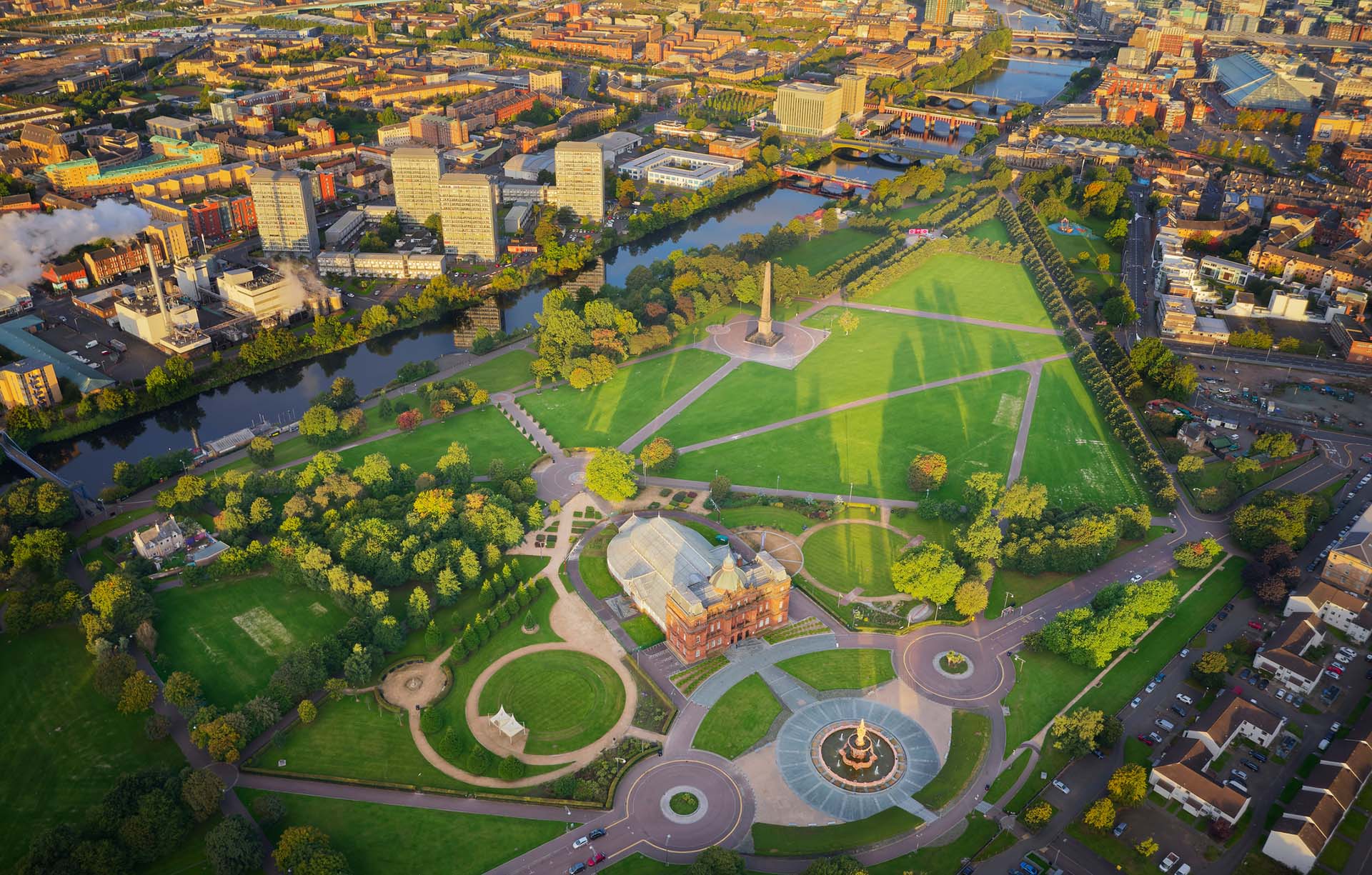
On the edge of Glasgow Green, the former Templeton carpet factory, completed in 1892, is one of the most extraordinary buildings in any British city. The architect William Leiper designed the facade as a deliberate imitation of the Doge's Palace in Venice, complete with polychromatic brick patterning, battlements, and Gothic lancet windows. It now houses a business centre and a brewery, and the best view of the facade is from the park itself, where the contrast between the building's Venetian grandeur and its industrial origins is most apparent.
Charles Rennie Mackintosh was born in Glasgow in 1868 and spent the most productive years of his career working in the city. His buildings and interiors are unlike anything produced by his contemporaries, combining a structural clarity drawn from Scottish vernacular architecture with an ornamental language closer to the Viennese Secession than to the historicism that dominated British design at the turn of the century. Glasgow has more Mackintosh buildings than anywhere else in the world, and following his work through the city gives a coherent and absorbing architectural itinerary.
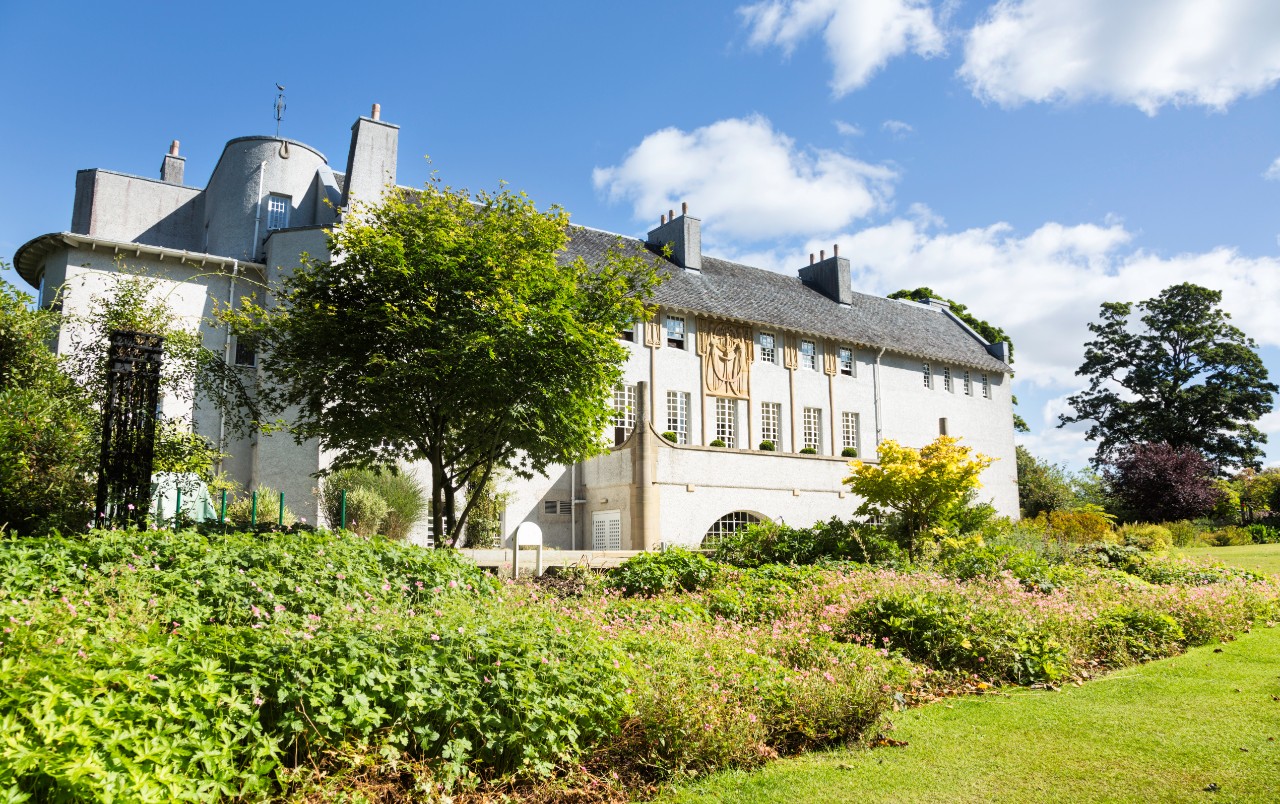
The Lighthouse on Mitchell Lane was Mackintosh's first public commission, designed in 1895 as the headquarters of the Glasgow Herald newspaper. The building now functions as Scotland's Centre for Design and Architecture and is open to the public. The Mackintosh Tower, accessed by a spiral staircase, gives one of the best elevated views over the city centre.
Mackintosh at the Willow on Sauchiehall Street is the restored version of the tea room Mackintosh designed for the entrepreneur Kate Cranston in 1903. The Salon de Luxe on the first floor, with its mirrored panels, high-backed chairs, and delicate leaded glass, represents Mackintosh's decorative style at its most complete. The building includes an exhibition on Mackintosh's life and work, and afternoon tea is served in the restored interiors.
The Charles Rennie Mackintosh Society offers three downloadable self-guided walking tours covering different areas of the city: Glasgow Style and Modernity, Second City, and The West End. Each traces a different aspect of the architectural story Mackintosh was part of, from the commercial centre to the university district.
Walking Tours in Glasgow runs a two-hour guided Mackintosh tour that departs on Saturdays and concludes at Mackintosh at the Willow. For a broader view of the city's Victorian commercial architecture, the Mackintosh Society's Second City walk covers Buchanan Street, Ingram Street, and the Merchant City in depth.
The decades after the Second World War produced a very different kind of Glasgow architecture. The postwar housing crisis and the ambitions of city planners resulted in a series of large-scale concrete structures that remain among the most debated buildings in the city. Brutalism in Glasgow ranges from the dramatic to the domestic, and its legacy is genuinely complicated.
The Glasgow Sheriff Court on Carlton Place, designed by Richard De'Ath at Keppie Design in 1988, is one of the later and more significant examples: a monumental civic building that makes no concession to the scale of its surroundings. The Savoy Centre on Sauchiehall Street is perhaps the most visible example of the style in the city centre, a building that generates strong opinions from Glaswegians. Anniesland Court in the West End, a residential tower designed to echo the horizontal layers of a traditional tenement placed on its side, is among the most architecturally interesting of the city's Brutalist housing schemes.
The Glasgow City Heritage Trust's Brutal Glasgow exhibition, which has toured the city, has done much to reconsider these buildings not just as architectural objects but as places with human histories: the stories of residents, workers, and communities who inhabited them and made them meaningful. For visitors interested in this strand of Glasgow's architectural story, a walk that takes in the area around the Sheriff Court and the Clydeside before heading to the Savoy Centre gives a reasonable survey of what the city produced in this period.
Glasgow's waterfront tells a different architectural story from the Victorian grid. The regeneration of the former industrial land along the Clyde, which accelerated after Glasgow's designation as European City of Culture in 1990, has produced some of the most striking contemporary buildings in Scotland.
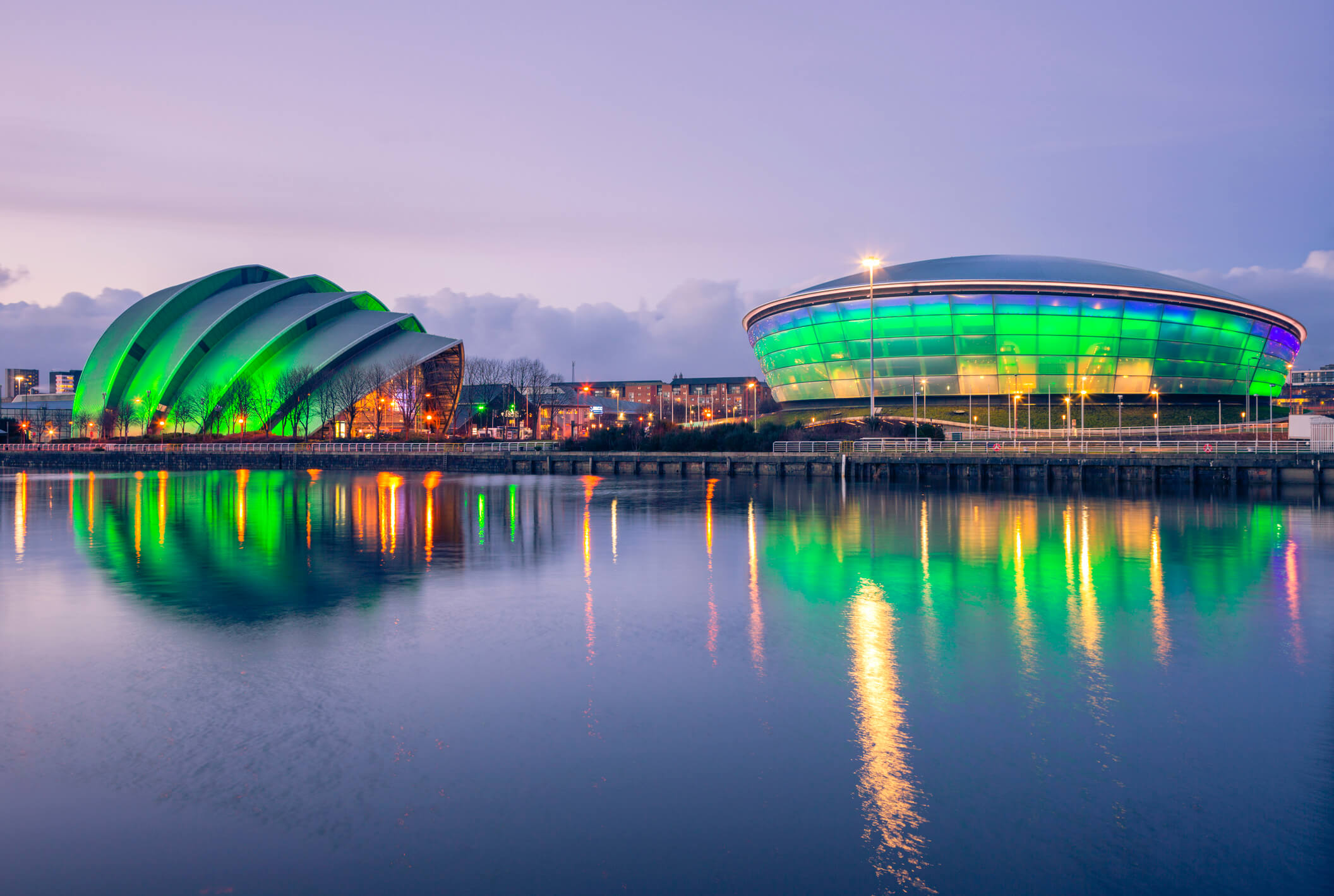
The SEC Armadillo, designed by Foster and Partners and completed in 1997, draws its form from the overlapping hulls of ships, a nod to the Clyde's shipbuilding heritage. It sits alongside the OVO Hydro, a spherical arena by HOK Architects opened in 2013, and together they form a waterfront cluster that has become one of the recognisable images of modern Glasgow. The Riverside Museum, designed by Zaha Hadid Architects and opened in 2011, takes this further: a zinc-clad structure of intersecting triangular ridges that follows the line of the river and the nearby motorway in its section. Inside, the museum houses Glasgow's collection of transport and technology history, and the building itself is as much the attraction as the exhibits.
Glasgow's architecture rewards a walk more than almost any other British city. The Victorian grid means routes are logical, distances are manageable, and the density of buildings worth stopping for is high throughout the centre.
A practical route that covers the main architectural periods starts at Glasgow Cathedral and the Necropolis in the east, moves through the Merchant City and along Ingram Street, arrives at George Square and the City Chambers, then heads south down Buchanan Street to the Lighthouse on Mitchell Lane and on to the Willow Tea Rooms on Sauchiehall Street. Extending the walk west along the Clyde brings you to the Armadillo and Riverside Museum area, though this section benefits from the Subway or a taxi for the return leg.
For a dedicated Mackintosh itinerary, the Charles Rennie Mackintosh Society offers three free downloadable self-guided walking tours covering different areas of the city: Glasgow Style and Modernity, Second City, and The West End. Each traces a distinct aspect of the architectural story Mackintosh was part of, from the commercial centre to the university district. Walking Tours in Glasgow also runs a two-hour guided Mackintosh tour departing on Saturdays and concluding at Mackintosh at the Willow, with a full-day private tour available by arrangement. For a broader survey of Victorian commercial architecture, the Second City walk covers Buchanan Street, Ingram Street, and the Merchant City in depth.
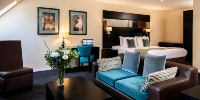
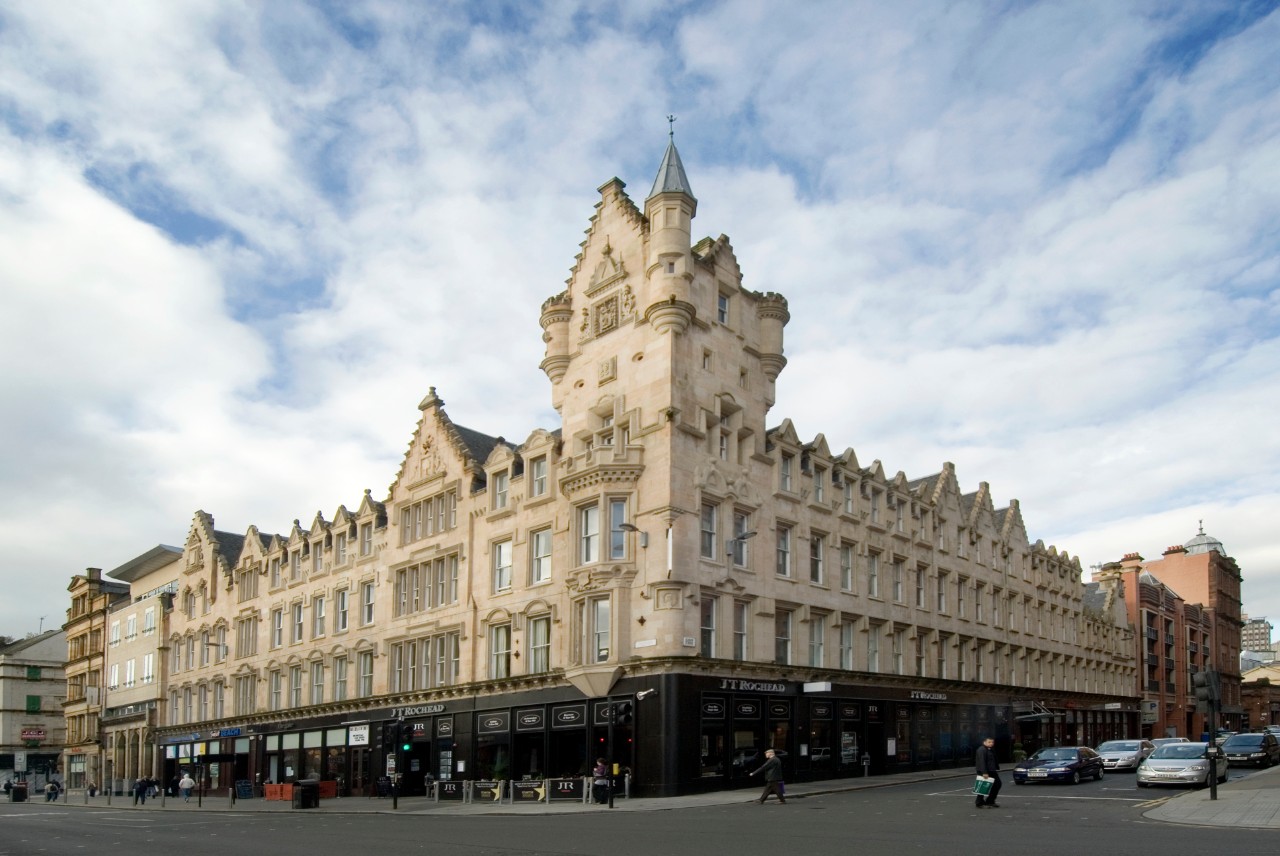
Fraser Suites Glasgow is itself part of the city's architectural story. The property occupies a Victorian building on Albion Street in the Merchant City, its baronial sandstone facade among the period buildings that define this part of the city. The building was sensitively renovated to create 98 serviced apartments ranging from studio to two-bedroom configurations, retaining the exterior character while providing fully contemporary interiors with kitchenettes, dining areas, lounges, and en-suite bathrooms with bathtubs. It is the largest serviced apartment space in Glasgow city centre.
The accommodation ranges from Studio Deluxe and Executive rooms at 42 sqm to Two Bedroom Executive apartments at 74 sqm, all with city views. Facilities include an on-site gym, continental breakfast, laundry, and housekeeping services. The Gallery of Modern Art, Glasgow Cathedral, and St Mungo Museum are all within five minutes on foot. Glasgow Central and Queen Street stations are a ten-minute walk, with the Subway nearby for access to the West End and the university district. For guests planning a longer visit to explore the city's architecture and culture in depth, long-stay options are available with rates designed for extended residency. View the current offers to plan your stay.
Glasgow is most widely associated with its Victorian civic and commercial architecture and the work of Charles Rennie Mackintosh. The City Chambers, Glasgow Cathedral, and the Templeton Carpet Factory are among the most famous individual buildings. Mackintosh's Glasgow School of Art building and the Willow Tea Rooms are the most visited of his works.
Yes. The Charles Rennie Mackintosh Society offers three free downloadable self-guided walking tours covering different areas of the city. Walking Tours in Glasgow runs a two-hour guided Mackintosh tour on Saturdays, with a full-day private tour also available. The Mackintosh Society also arranges specialist guided tours by arrangement.
The Glasgow Sheriff Court on Carlton Place is one of the most significant civic examples of late Brutalist architecture in the city, listed in 2013. Anniesland Court is among the most architecturally notable of the Brutalist residential buildings. The Savoy Centre on Sauchiehall Street is the most discussed example in the city centre.
Fraser Suites Glasgow is on Albion Street in the Merchant City, within five minutes' walk of Glasgow Cathedral, the Gallery of Modern Art, and the Victorian civic buildings around George Square. The Lighthouse and Willow Tea Rooms are accessible on foot, and the West End, with its university buildings and Kelvingrove, is reachable by Subway from nearby Buchanan Street station.
Several of the major historic buildings offer public access. Glasgow City Chambers runs guided tours of the interior. Glasgow Cathedral is open daily. The Lighthouse and Mackintosh at the Willow both welcome visitors. Kelvingrove Art Gallery and Museum is free. The Riverside Museum and Necropolis are also free to visit.